How the Gouzenko Affair Reshaped My Series
I thought I understood where the Cold War began.
Like most of us, my mind went straight to the obvious places — Berlin. Moscow. Washington. Grand speeches. Ideological lines drawn across continents. The kind of history that feels loud and unmistakable.
But the deeper I moved into the early postwar years for this new historical mystery series, the more I felt a quiet resistance in my outline. Something wasn’t sitting quite right. The tension I was trying to build felt… misplaced.
What I eventually discovered humbled me.
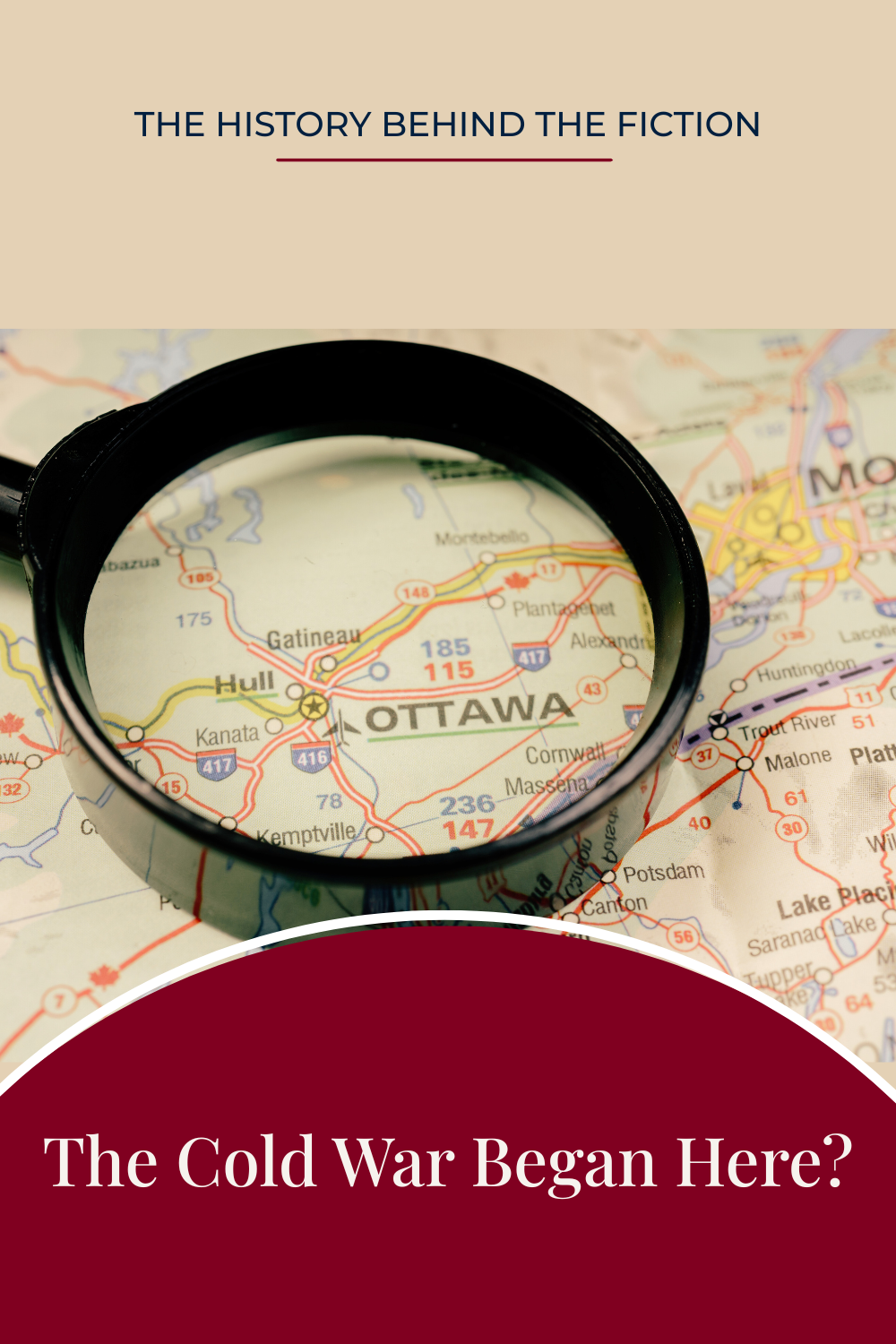
Because the moment that reframed everything wasn’t centered in one of the world’s great power capitals at all. It unfolded in Ottawa. In 1945. In the uneasy days just after relief had washed over a war-weary country.
And once I understood what had happened there — and what it quietly set in motion — I couldn’t unsee it.
This is one of those stages in writing that feels both exhilarating and disorienting. The moment when history stops being background texture and starts demanding its rightful place in the story.
If you’re curious how a single historical event can reshape an entire series outline, this was that moment.
Why I Initially Misjudged Where the Cold War Began?
When I first began outlining this series, I did what most of us instinctively do.
I placed the beginning of the Cold War in the places history textbooks tend to emphasize — Berlin blockades, superpower summits, speeches delivered beneath heavy chandeliers. The kind of geopolitical tension that feels visible and unmistakable.
And because of that assumption, I positioned my story accordingly.
Close enough to feel the pressure.
Far enough from the fray to remain personal.
It made sense on paper. A mystery unfolding in the shadow of global powers. Political tension humming somewhere in the distance, shaping events without overwhelming them.
But as I moved from broad timeline research into the granular details of 1945 and 1946, something in my outline began to resist that neat framing.
The emotional tone I was trying to build — the fragile uncertainty, the recalibration of trust, the sense that rules were quietly shifting — didn’t quite match the locations I intended to set my story.
The history felt louder than the atmosphere I needed.
That was my first clue.
It wasn’t that the global narrative was wrong. It was that it wasn’t complete. I had inherited a tidy version of when the Cold War began — one shaped by hindsight and headlines.
But lived history is rarely tidy.
The deeper I dug into the immediate postwar months, the more I realized that the tension I was trying to capture wasn’t forming in the places I expected. It was forming earlier. And closer to home than I had anticipated.
Research doesn’t just give you facts.
Sometimes it exposes the assumptions you didn’t realize you were carrying.
And once those assumptions begin to crack, the story you thought you were telling starts to shift.
Discovering the Gouzenko Affair — and Why It Stopped Me
The name didn’t mean anything to me at first.
Igor Gouzenko.
A Soviet cipher clerk stationed in Ottawa.
September 1945.
The war had just ended. Relief was still fresh. The world was trying to exhale.
And yet, here was a man walking out of the Soviet embassy with documents hidden under his clothes — documents that exposed an active Soviet espionage network operating in Canada and beyond.
What stunned me wasn’t just the act of defection.
It was what happened next.
When Gouzenko and his wife tried to alert Canadian authorities, they struggled to find anyone willing to listen. They first approached government offices, carrying documents that exposed an espionage network few were prepared to imagine. They waited. They were redirected. The implications were unclear to those receiving them.
Eventually, in desperation, they turned to a newspaper before returning once more to plead their case with officials.
Doors closed. Officials hesitated. No one quite grasped the magnitude of what they were being handed — or perhaps, in a country only days removed from relief at the end of one war, the suggestion of another kind of conflict was simply too difficult to absorb.
That detail stopped me.
In hindsight, we view the Gouzenko Affair as a triggering moment in early Cold War tensions. But in real time, it unfolded in confusion and uncertainty. Canadian authorities were not prepared. The machinery of response didn’t yet exist for this kind of revelation.
And as the hours passed, the danger intensified.
Once Soviet officials realized Gouzenko had disappeared — and that documents were missing — the risk to him and his family escalated immediately. Their decision wasn’t theoretical. It was life-altering. Potentially fatal.
I remember sitting with that realization longer than I expected to.
Because this wasn’t cinematic espionage with clean lines and dramatic speeches. It was messy. Hesitant. Human. A government unsure. A couple seeking protection. Intelligence networks quietly unraveling beneath the surface of a country still celebrating peace.
And suddenly, the narrative I thought I understood about the beginning of the Cold War felt incomplete.
This wasn’t just a geopolitical shift.
It was a moment of exposure.
A fracture in trust.
The consequences would ripple outward — investigations, arrests, strained alliances between former wartime allies — but what stayed with me most was the atmosphere of those first uncertain hours.
The vulnerability.
The disbelief.
The realization that something had shifted — even if most people didn’t yet know it.
That atmosphere felt exactly like the emotional terrain my story had been reaching toward.
And that’s when I understood I wasn’t just uncovering a historical footnote.
I was finding the ground my series needed to stand on.
The Atmosphere That Changed My Series
What stayed with me wasn’t only the defection itself.
It was the air surrounding it.
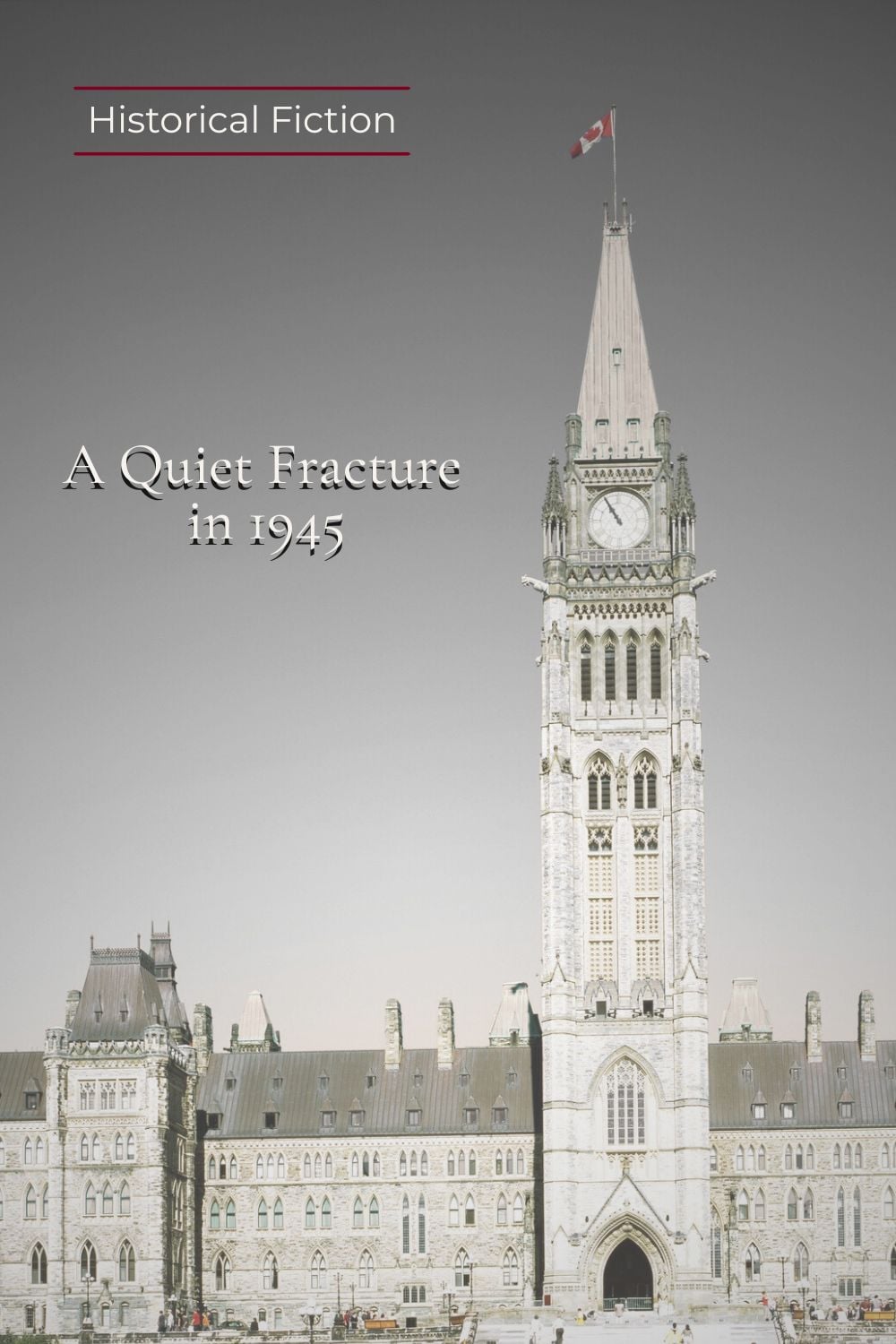
Ottawa in late 1945 was not a city bracing for ideological warfare. It was a city exhaling. Families were reuniting. Uniforms were being folded away. Lives were trying to return to something recognizable.
There was relief. Fatigue. A cautious hopefulness.
And beneath that surface — almost invisibly — intelligence networks were being exposed. Investigations were beginning. Allegiances were being questioned. Trust was quietly recalibrating.
That fragile in-between is what caught me.
History often tells us when an era officially begins. But the lived experience of transition is rarely that clean. It’s slower. Subtler. It unfolds in conversations half-understood and rumors not yet confirmed. It moves through neighborhoods before it ever reaches headlines.
For a historical mystery writer, that space is fertile ground.
Because a mystery thrives in uncertainty. In partial information. In the tension between what appears stable and what is quietly shifting underneath.
When I understood the emotional landscape of those early postwar months — not just the geopolitical consequences but the atmosphere ordinary people would have been breathing — my series began to anchor itself.
The political dimension didn’t need to dominate the story.
It needed to hum beneath it.
That was the difference.
I wasn’t writing a spy thriller. I wasn’t chasing dramatic summit scenes or international brinkmanship. I was writing about a woman moving through a world where the rules were changing before anyone had fully articulated the change.
A world where information could be dangerous.
Where noticing too much might carry consequences.
Where curiosity wasn’t neutral.
And once I saw that atmosphere clearly, the hybrid nature of this series — intimate and political, personal and expansive — stopped feeling like a structural problem.
It started feeling inevitable.

How Research Shapes Character — Not Just Plot
One of the quiet dangers of writing historical fiction is believing research exists primarily to serve plot.
Dates. Events. Timelines. Political shifts.
Those things matter. Of course they do. But they are scaffolding. They are not the story itself.
The story lives in people.
Once I understood the emotional terrain of postwar Canada — the uncertainty, the recalibration of trust, the exposure of hidden networks — the next question became unavoidable:
If this is the world she inhabits…
who does she have to be in order to move through it believably?
Because placing a curious, observant woman inside a moment like that changes everything.
Her questions are no longer merely social.
They are potentially destabilizing.
What she notices might not only alter her personal circle — it might brush against something far larger.
And that means her formation matters.
Her education.
Her access to certain spaces.
Her understanding of power.
Her ability to read a room.
In a world where information is shifting from casual to dangerous, curiosity stops being charming. It becomes a risk.
This is where research reshapes character.
Not by dictating what she does — but by defining what is possible for her to do without breaking credibility.
A common mistake in historical fiction is researching the event but not the atmosphere. Writers can become fluent in what happened while overlooking what it felt like to live inside it.
It’s something I’ve explored before when writing about women whose wartime work depended on invisibility — where the atmosphere mattered as much as the event itself.
The event tells us what happened. The atmosphere tells us how people survived it.
And atmosphere is what determines character behavior.
Would she speak openly?
Would she hesitate?
Would she understand the stakes immediately — or only in hindsight?
When I reframed the Cold War not as a loud, declared era but as a quiet, emerging fracture, my protagonist sharpened. She needed perceptiveness. She needed restraint. She needed a reason to notice what others overlooked.
And suddenly, her arc began to form not in isolation from history — but because of it.
That’s when a series stops feeling conceptual and starts feeling inhabited.
Why I’m Drawn to Quietly Foundational History
I’ve never been most drawn to the loudest moments in history.
The grand declarations.
The sweeping speeches.
The scenes we already recognize before they’re described.
What fascinates me are the quieter turning points. The moments that don’t immediately announce themselves as era-defining — but quietly alter the direction of what follows.
The Gouzenko Affair was not loud in the way some historical events are loud.
There were no public rallies marking the beginning of a new global tension. No official proclamation that one war had ended and another had begun. What unfolded instead was exposure. Investigation. Unease. A gradual tightening of suspicion between former allies.
It was foundational.
And foundational history is fertile ground for mystery.
Because mysteries are rarely about spectacle. They are about hidden fractures. About information withheld. About the cost of knowing something you cannot unknow.
When I realized that this series didn’t need to orbit the obvious centers of Cold War power — that it could root itself in a moment of Canadian history that quietly reshaped international trust — something settled for me.
The hybrid nature of the story no longer felt accidental.
It felt anchored.
The political tension didn’t overpower the intimate threads. It gave them weight. It gave them consequence. It created a world where what my protagonist notices might matter beyond her immediate circle — even if she doesn’t yet fully understand how.
This is the stage of writing I find both exhilarating and humbling.
Exhilarating, because discovery reshapes everything.
Humbling, because it reminds me how much of history we inherit in simplified form — and how much richer it becomes when we look just beneath the surface.
And once I saw clearly the world my protagonist would be moving through, I couldn’t avoid the next question.
If this is the air she breathes…
who has it shaped her into becoming?
That is where the focus turns next.
Where the Story Turns Next
Research is rarely linear.
It humbles you. It redirects you. It forces you to loosen your grip on the version of history you thought you understood.
This discovery did all of that.
It shifted the foundation of this series — not by making it bigger, but by making it more precise. More honest. More anchored in the emotional reality of its time.
And once the historical ground felt solid, something else came into focus.
Not the politics.
Not the espionage.
Her. My protagonist.
Because if this is the world she is moving through — one shaped by quiet suspicion, recalibrated alliances, and the subtle danger of knowing too much — then who she is becomes everything.
Her past.
Her formation.
Her instincts.
Her courage.
That is where the story turns next.
If you’d like to hear me reflect on how this moment reshaped the series — and why it stopped me in my tracks — you can watch the Behind The Scenes episode below.
And if you’re curious where this new historical mystery series is heading, I’m grateful you’re here at this early stage. These stories are still taking shape.
There’s something meaningful about witnessing a series while it’s still becoming.
Frequently Asked Questions
1. When did the Cold War really begin?
Many history books mark the beginning of the Cold War in the late 1940s, often pointing to events in Berlin or escalating tensions between the United States and the Soviet Union. But some historians identify earlier turning points — including the 1945 Gouzenko Affair in Canada — as one of the first clear fractures between former wartime allies.
2. What was the Gouzenko Affair in Canada?
The Gouzenko Affair began in September 1945 when Soviet cipher clerk Igor Gouzenko defected in Ottawa, bringing documents that exposed a Soviet espionage network operating in Canada. His defection led to investigations, arrests, and a significant shift in international trust during the fragile postwar months.
3. Why is the Gouzenko Affair important to Cold War history?
The affair is often considered one of the first major public revelations of Soviet espionage in North America after World War II. It contributed to rising suspicion between the Soviet Union and Western allies and helped shape early Cold War tensions.
4. How do historical fiction authors decide which real events to include?
Historical fiction writers look for moments that shape atmosphere as much as plot. The goal isn’t to include every major event, but to choose turning points that meaningfully affect a character’s world — politically, socially, and emotionally — while maintaining narrative focus.
5. How much research goes into writing a historical mystery?
Research often begins broadly — timelines, political context, cultural norms — and then narrows into lived experience. For a historical mystery, understanding atmosphere is just as important as understanding events. The emotional texture of a period determines how characters behave, what risks they face, and what is believable within their world.