Real Women Spies of the 1940s Whose Lives Read Like Novels
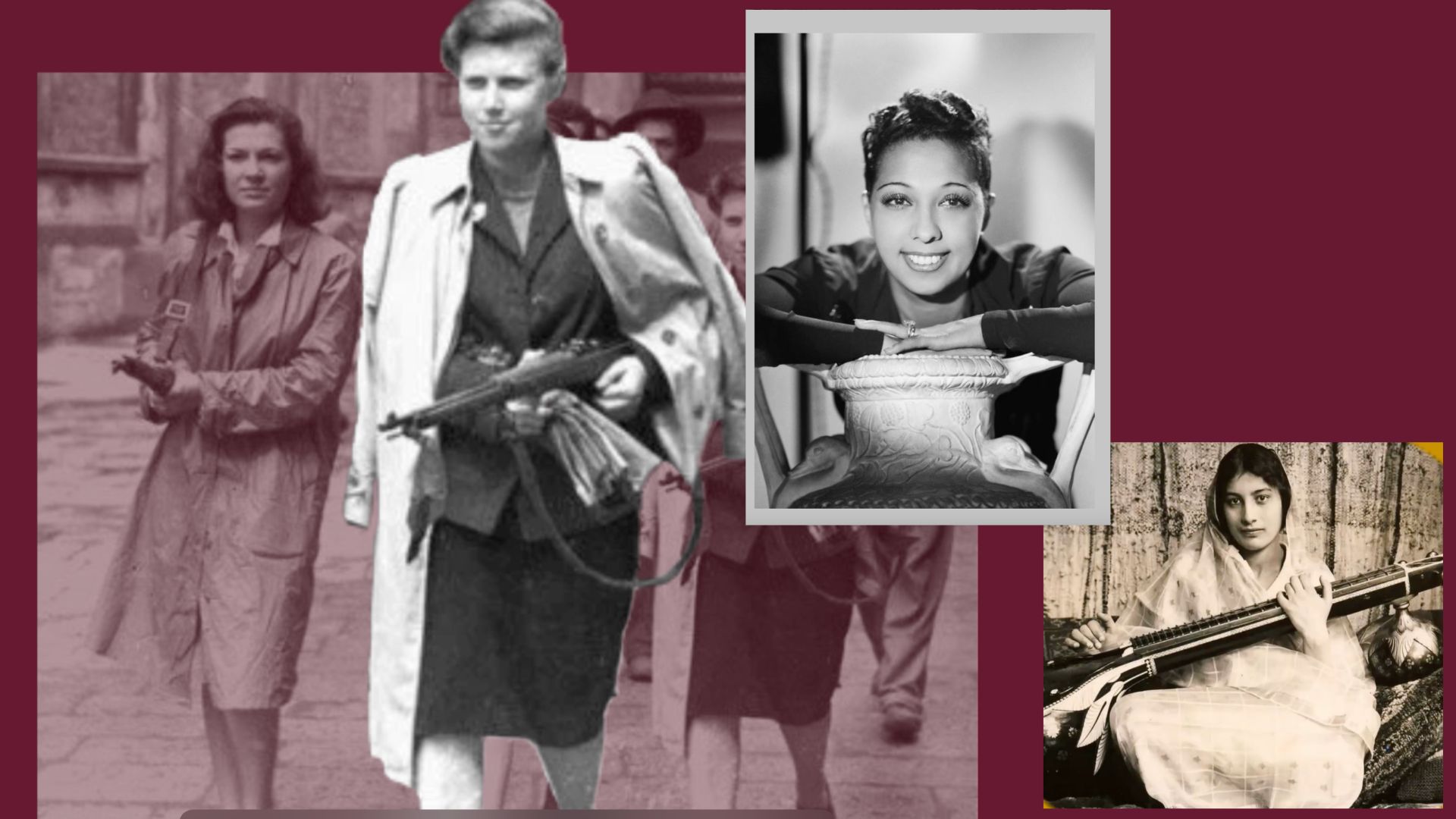
When we imagine spies and detectives, we often think in cinematic terms—fast pacing, clever disguises, dramatic reveals. But real espionage in the 1940s was rarely glamorous. It was quiet. Isolating. And relentlessly dangerous.
Much of the intelligence work that helped shape the outcome of World War II depended on women operating without recognition, often without protection, and sometimes without any expectation of survival. Their successes were classified. Their failures, fatal.
Here are three real women whose wartime lives feel so richly drawn they could step straight into the pages of a historical novel—and whose stories, once hidden, are now finally being told through biography, film, and historical fiction.
If you’d rather listen or watch these stories unfold, you can view the full Author Notes video below.
Virginia Hall
The operative the Gestapo feared
Virginia Hall did not look like a typical intelligence operative—and that was precisely why she succeeded.
An American working first with Britain’s Special Operations Executive (SOE) and later the U.S. Office of Strategic Services (OSS), Hall became one of the most effective Allied agents operating inside occupied France. She built resistance networks, arranged weapons drops, coordinated sabotage operations, and organized escape routes for downed Allied airmen.
All of this while walking with a prosthetic leg, the result of a hunting accident years earlier.
The Gestapo knew her only by reputation. They called her “the most dangerous of all Allied spies.” German intelligence circulated warnings describing her limp, yet she continued to evade capture—traveling by foot, bicycle, and train, often sleeping outdoors or relying on villagers who risked execution for helping her.
After escaping over the Pyrenees when her network was compromised, Hall later returned to France disguised as an elderly farm woman. She dyed her hair, altered her gait, and carried weapons and radio equipment hidden beneath her clothing.
Her work directly supported major resistance efforts in the lead-up to D-Day, yet after the war, much of her service remained classified. She received the Distinguished Service Cross—one of the few women to do so—but avoided public recognition, returning quietly to civilian life.
Hall’s story dismantles every assumption about who “belongs” in espionage. It is not cleverness alone that defines a spy—but endurance, adaptability, and the willingness to continue long after fear has set in.
Read / Watch:
-
A Woman of No Importance — Sonia Purnell
-
A Call to Spy (2019)
Noor Inayat Khan
The wireless operator who refused to leave
Noor Inayat Khan was, by nearly every measure, an unlikely spy.
The daughter of an Indian Sufi mystic and a pacifist by upbringing, she had trained as a musician and writer before the war. Yet she volunteered for service with Britain’s SOE and became the first female wireless operator sent into occupied Paris—one of the most dangerous assignments in wartime intelligence.
Wireless operators had an average life expectancy of six weeks.
They were hunted relentlessly, forced to transmit messages from constantly changing locations, knowing that a single prolonged transmission could allow German direction-finding teams to triangulate their position.
When her resistance network was dismantled and fellow agents were captured or killed, Khan was ordered to return to Britain. She refused.
For months, she remained the sole radio link between Paris resistance cells and London, transmitting intelligence under extreme psychological strain. Eventually betrayed, she was arrested, interrogated, and imprisoned. Despite repeated torture and months of solitary confinement, she refused to give the Germans any usable information.
In 1944, Noor Inayat Khan was executed at Dachau concentration camp. Witnesses later testified that her final word was “Liberté.”
Her bravery was not loud or flamboyant. It was sustained. Relentless. Rooted in principle rather than adrenaline. Her life reminds us that wartime courage often looks like staying when escape is still possible—and choosing silence when speaking might save yourself.
Read / Watch:
-
Spy Princess — Shrabani Basu
-
A Call to Spy (2019)
Josephine Baker
When celebrity became camouflage
Josephine Baker was already an international star when war broke out in Europe.
An American-born performer who found fame and freedom in France, Baker used her celebrity, wealth, and mobility as cover for intelligence work with the French Resistance and Allied forces. Her performances gave her access to diplomats, military officers, and social elites—spaces where information flowed freely.
She gathered intelligence at parties, carried documents hidden in her luggage, and smuggled coded messages written in invisible ink on sheet music. Her fame provided protection; few suspected the glamorous entertainer of espionage.
Baker also worked as a Red Cross nurse, supported resistance members financially, and later served as a sub-lieutenant in the Women’s Auxiliary Air Force of Free France.
After the war, she was awarded the Croix de Guerre and inducted into the French Panthéon decades later—one of the few women and the first Black woman to receive that honor.
Her story challenges narrow definitions of resistance. Espionage did not always involve weapons or radios. Sometimes it relied on visibility rather than secrecy—and on turning the expectations of others into a weapon.
Read / Watch:
- The National WWII Museum articles on Josephine Baker
- The Josephine Baker Story (HBO, 1991)
Why these stories matter to historical fiction
Historical fiction gives us what official records often cannot: the interior lives. The waiting. The fear. The moral calculus of every decision.
These women were not footnotes to history. They were full characters—complex, contradictory, brave, and deeply human. Their lives remind us that history is not shaped only by generals and battles, but by individuals who made impossible choices in ordinary rooms, under extraordinary pressure.
For writers and readers alike, their stories offer something essential: proof that quiet courage can change the course of events—and that some of the most powerful stories are the ones that were nearly lost.
Further Reading & Watching
Books
- A Woman of No Importance — Sonia Purnell
- Spy Princess — Shrabani Basu
Films
- A Call to Spy (2019)
- The Josephine Baker Story (1991, HBO)
Frequently Asked Questions About Women Spies in the 1940s
Were women commonly used as spies during World War II?
Yes—though their contributions were often underreported or classified for decades. Women played critical roles in intelligence work during World War II, serving as couriers, wireless operators, codebreakers, resistance organizers, and intelligence gatherers. Organizations such as Britain’s Special Operations Executive (SOE) actively recruited women, recognizing that they could often move through occupied territories with less suspicion than men.
Why were wireless operators like Noor Inayat Khan at such high risk?
Wireless operators were among the most vulnerable intelligence agents of the war. Radio transmissions could be detected and traced by enemy direction-finding equipment, sometimes within minutes. Many operators were captured within weeks of deployment. Despite this, agents like Noor Inayat Khan continued transmitting vital intelligence, fully aware that capture often meant torture or execution.
Did Virginia Hall really evade the Gestapo while using a prosthetic leg?
She did. Virginia Hall lost part of her leg years before the war and walked with a noticeable limp, yet she successfully operated across occupied France. The Gestapo circulated warnings about her, identifying her as a dangerous Allied agent, but she repeatedly escaped capture. Her ability to adapt—changing disguises, roles, and even her physical presentation—was central to her success.
How did Josephine Baker hide intelligence in plain sight?
Josephine Baker used her celebrity as camouflage. She gathered information at social events attended by diplomats and military officials and transported intelligence while traveling for performances. Some messages were written in invisible ink on sheet music or hidden among her belongings—methods that relied on the assumption that a glamorous entertainer would not be suspected of espionage.
Why are these stories especially meaningful for historical fiction readers?
These women’s lives offer the emotional and moral complexity that historical fiction explores so well. Their stories reveal not only what they did, but what it cost them—the isolation, fear, and long periods of waiting. For readers, they provide a powerful reminder that history is shaped by individuals making impossible choices, often without recognition or reward.
Enjoy the history behind the stories? Be sure to subscribe to my YouTube Channel where I share historical tidbits, new historical fiction releases, a journey through my writing process, and more on Author Notes.