Michelle Cox on The Fallen Woman’s Daughter and the Stories Families Carry
Some stories aren’t hidden because they were forgotten.
Sometimes they’re hidden because the people who lived them couldn’t bear to speak them aloud.
The longer we spend with history, the more we begin to realize how many lives were shaped inside that silence — especially within families, where love, judgment, grief, and misunderstanding can exist side by side.
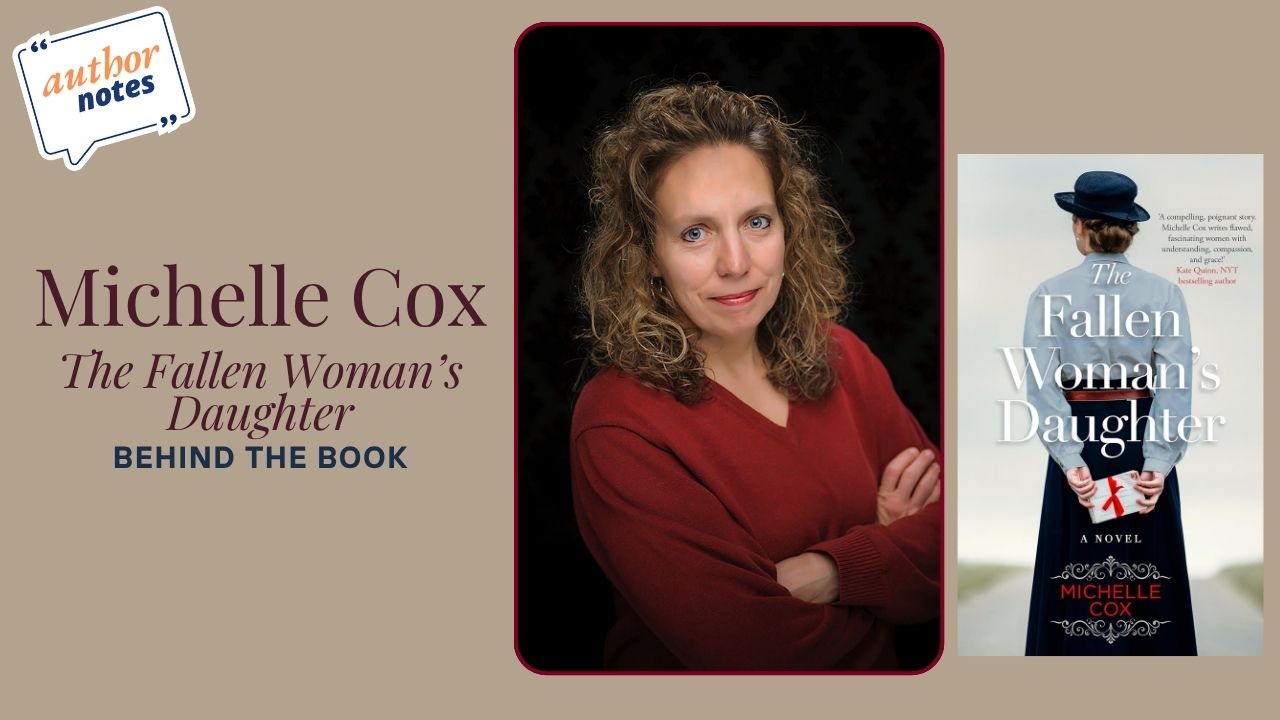
In this Behind the Book conversation, historical fiction author Michelle Cox shares the deeply personal inspiration behind The Fallen Woman’s Daughter, a multi-generational novel about mothers and daughters, fractured relationships, and the long road toward understanding.
And what unfolds is not simply a story about the past — but about the ways families carry memory differently across time.
This was the moment everything shifted—and if you’d like to see how this unfolded in real time, you can watch the full episode below.
A Story Rooted in Real Lives
Unlike many historical novels inspired by distant archival discoveries, The Fallen Woman’s Daughter began with a real woman Michelle met while working in a Chicago-area nursing home in the early 1990s.
The woman shared an extraordinary story about her life — one that stayed with Michelle long after the conversation ended.
But what made the experience even more powerful was that Michelle was later able to interview the woman’s daughter as well.
Suddenly, the same history existed in two forms.
A mother’s memory.
A daughter’s memory.
Two people carrying the same events in entirely different ways.
And that became the emotional center of the novel.
Michelle Cox explores this idea throughout The Fallen Woman’s Daughter. You can learn more about her work on her official website.
Two Timelines, One Family Story
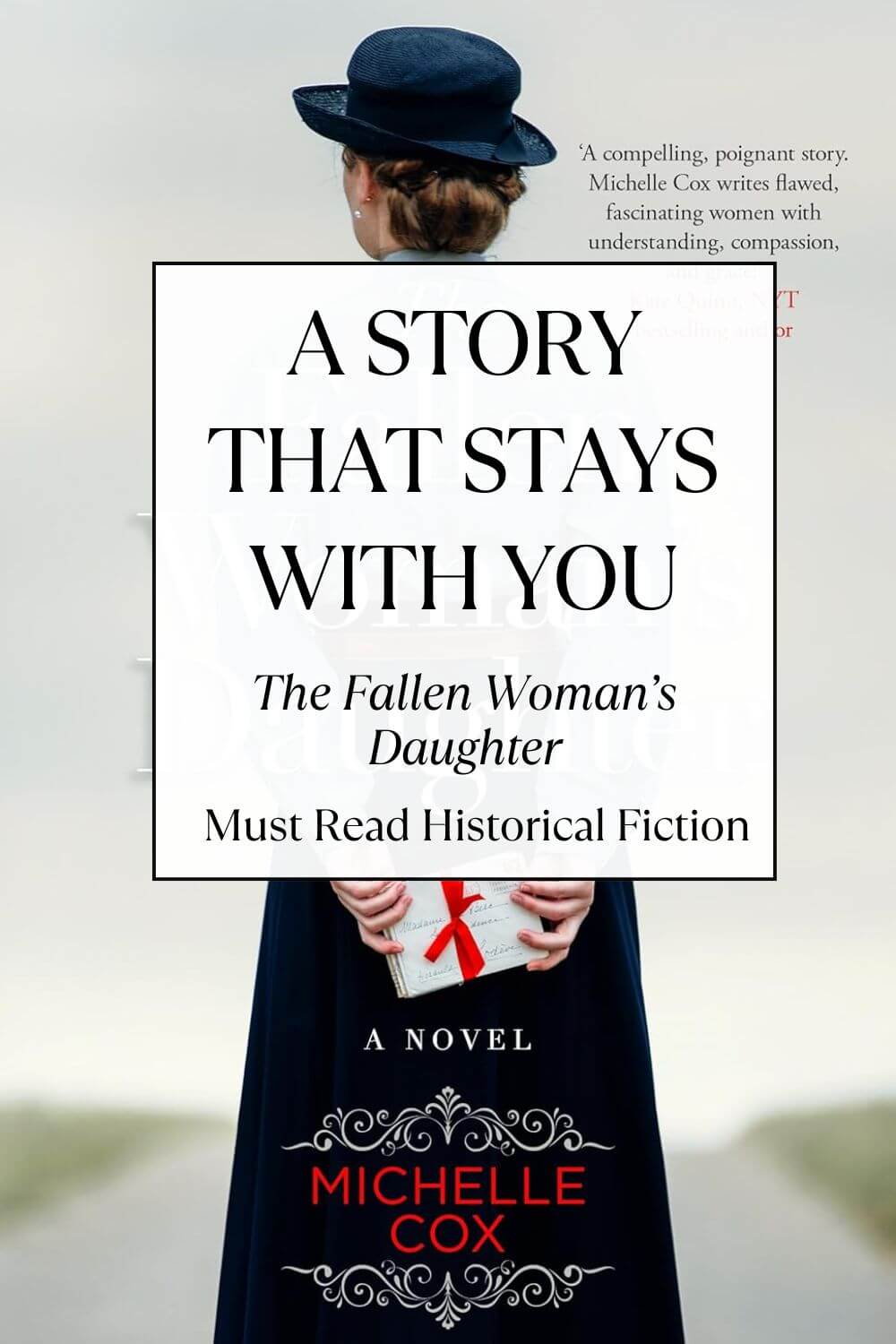
Told through dual timelines spanning the 1920s through the 1960s, the novel follows two intertwined narratives.
In one timeline, Gertie grows up in a coal mining town in Iowa before running away with a carnival barker, believing she is stepping into a life of freedom and adventure.
In another, two young girls — Nora and Patty — are removed from their mother and sent to a school for girls from “broken homes,” where they wait for the mother they believe will eventually come back for them.
She never does.
What unfolds from there is not simply a mystery of circumstance, but an emotional reckoning.
A story about:
- abandonment
- misunderstanding
- motherhood
- judgment
- and ultimately, redemption
And that’s where things started to shift.
Because as Michelle explains, the novel becomes less about what happened — and more about how differently people understand the same experience depending on where they stand inside it.
The Daughter Who Finally Begins to Understand
Of all the characters in the novel, Michelle says Nora remained closest to her heart.
For much of her life, Nora judges her mother harshly, seeing only the choices that affected her as a child.
But time changes perspective.
As Nora becomes a mother herself — and later discovers remnants of her mother’s private life — she begins to understand the realities her mother carried in ways she never could before.
There is a softening.
A reframing.
A quiet recognition that understanding another person’s life is rarely as simple as it once seemed.
It’s a deeply human realization — and one many readers will likely recognize within their own family histories.
If you’ve ever been drawn to stories about complicated family relationships and the emotional inheritance passed between generations, you may also enjoy my Historical Deep Dive on the Persons Case and the women history struggled to fully recognize.
Judgment, Grace, and the Stories We Tell About One Another
One of the most moving moments Michelle shares in the interview comes from a letter discovered late in the novel.
In it, Nora’s sister reflects on the biblical story of the prodigal son, writing:
Each of us at some point or another have been the father, the prodigal, and the older son.
Michelle describes this idea as the emotional heart of the novel.
The recognition that:
- all of us have judged
- all of us have been judged
- and all of us eventually long for grace
Historical fiction often shines brightest when it reveals not only what happened in the past — but the emotional truths that continue repeating themselves across generations.
And perhaps that’s why stories like this linger.
Not because the circumstances are identical to our own, but because the emotions beneath them still feel recognizable.
The Historical Detail That Stayed With Her
While much of the novel came directly from personal testimony, Michelle also uncovered historical research that deeply unsettled her.
As she researched the real institution that inspired the fictional girls’ school in the novel, she discovered a newspaper article from the 1950s describing a scandal involving the school.
Hidden beneath one of the cottages on the property was a dungeon used to punish girls living there.
The detail had never appeared in the stories Michelle originally heard from the women she interviewed.
But it revealed something larger about the world these girls inhabited — and the systems designed to control vulnerable young women during that era.
That’s when something unexpected surfaced.
Not simply the story itself, but the realization of how many experiences never fully entered the historical record at all.
Frequently Asked Questions
What is The Fallen Woman’s Daughter about?
The novel is a dual-timeline historical women’s fiction story following a mother and daughter across several decades as they navigate abandonment, judgment, forgiveness, and redemption.
Is The Fallen Woman’s Daughter based on a true story?
Yes. Michelle Cox explains that many elements of the novel were inspired by the real-life stories shared with her by a mother and daughter she interviewed while working at a nursing home in Chicago.
What themes does the novel explore?
The story explores motherhood, family relationships, judgment, forgiveness, redemption, and the ways people experience and remember the same events differently.
Historical fiction reminds us that the past is rarely experienced the same way by everyone who lived through it.
One person’s survival story may become another person’s wound.
One person’s silence may become another person’s unanswered question.
The Fallen Woman’s Daughter explores those fragile spaces between memory, judgment, and understanding with remarkable emotional honesty.
And perhaps that’s what stories like this ask us to do in the end:
Look again.
Listen longer.
And leave room for the possibility that someone else’s story may hold truths we were never able to see before.
Because sometimes, what makes a story stay with us… is simply whether it feels true.
Step behind the stories that history almost forgot.
Join my newsletter for Behind the Book conversations, historical discoveries, and reflections on the stories woven through time.