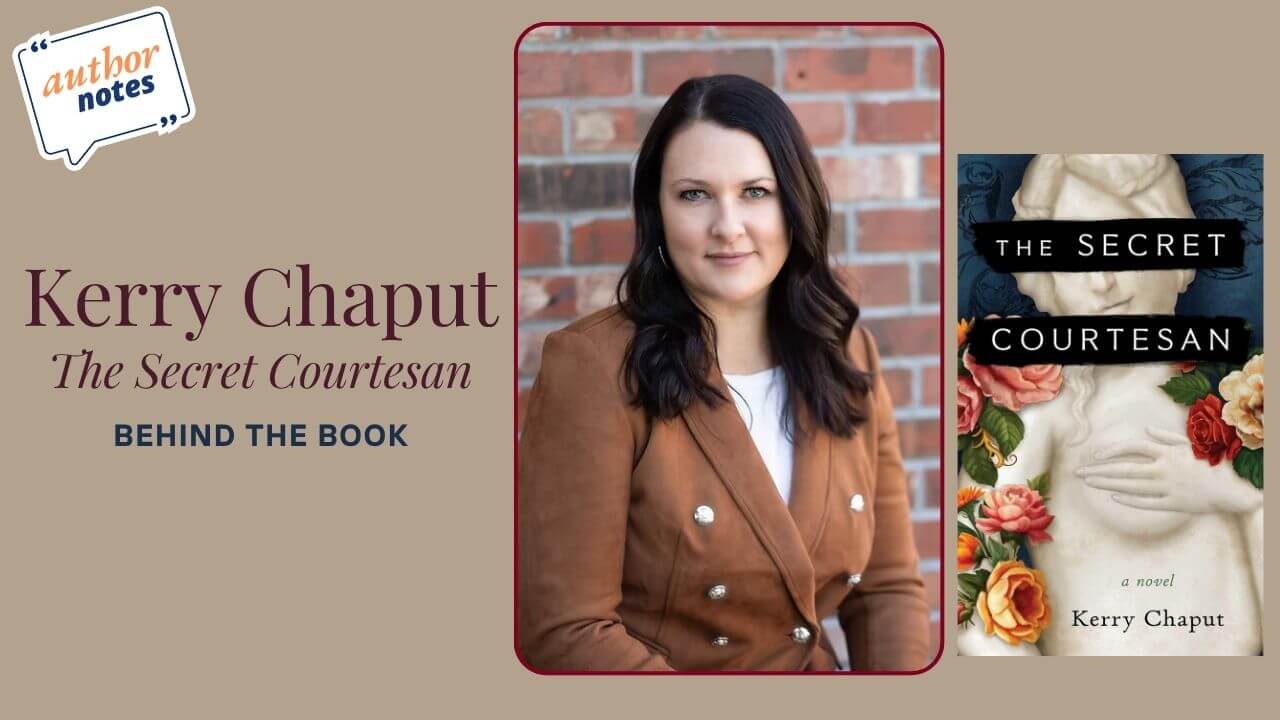
Kerry Chaput on The Secret Courtesan and the Women History Forgot
The Stories History Didn’t Keep.
A Behind the Book conversation with Kerry Chaput
There are moments in research that feel less like discovery and more like recognition.
A question that lingers longer than it should.
A gap that feels too deliberate to ignore.
The more time you spend with history, the more you begin to notice not only what has been preserved — but what has quietly disappeared.
In this Behind the Book conversation, historical fiction author Kerry Chaput explores one of those absences in her novel The Secret Courtesan — a story shaped by the question of who created the art we admire… and why some names were never recorded.
If you prefer to watch or listen to our full conversation, you can view the Behind the Book interview below.
A Question That Refused to Be Answered
The origins of The Secret Courtesan began with something surprisingly simple.
Kerry knew she wanted to write a novel set during the Renaissance, a period she had explored before. But as she began researching, her attention shifted toward female artists — and specifically, the absence of women in certain artistic roles.
What she discovered was not a lack of talent, but a lack of permission.
Women were:
- barred from apprenticeships
- denied access to formal training
- restricted from studying anatomy
- limited by social expectations that defined what was “appropriate” work
And in the case of sculpture — a physically demanding and publicly visible art form — those limitations became even more pronounced.
The deeper she looked, the clearer it became:
Women had always been there.
But history had not kept their names.
Kerry Chaput explores this idea in her novel The Secret Courtesan. You can learn more about her work on her official website.
The Story at the Center of the Novel
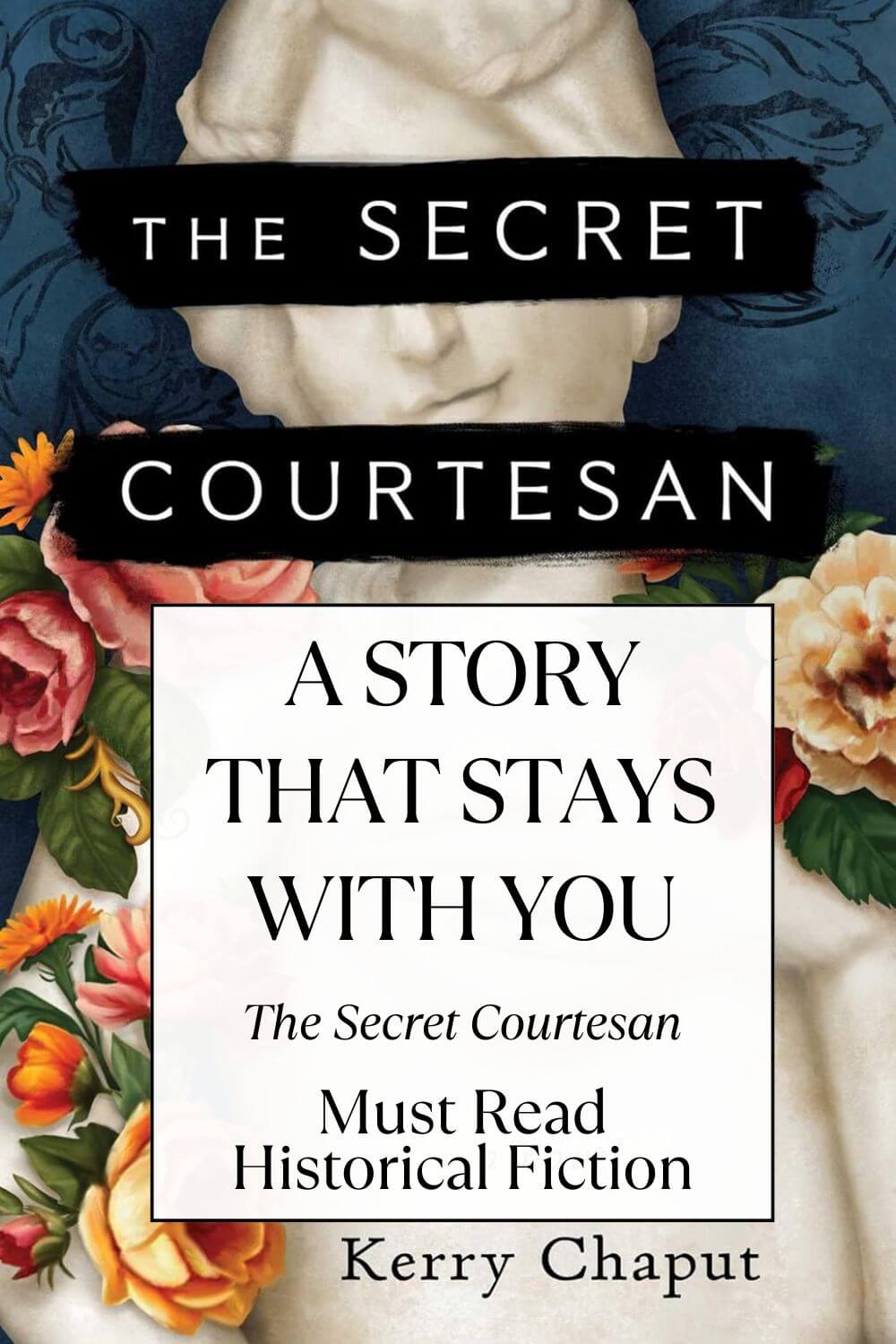
That question becomes the foundation of The Secret Courtesan.
The novel begins with the discovery of an erotic statue in Venice, believed to be the work of a well-known male artist.
But the protagonist — a modern-day historian — suspects something else entirely.
She believes the statue was actually created by a courtesan whose work has been erased from history.
What follows is both a scholarly investigation and a personal risk.
As she works to authenticate the statue and challenge long-held assumptions, she disrupts established narratives — and places herself in conflict with those invested in preserving them.
Two Women, Two Timelines, One Question
At the heart of the novel are two protagonists:
- a woman in the present
- a woman in the past
Both are navigating systems that define what they are allowed to say, pursue, and become.
As Kerry explains, their journeys reflect a shared tension:
The pressure to remain within expectation —
and the cost of stepping beyond it.
It’s a tension many readers will recognize.
The feeling of being asked to fit into a version of yourself that doesn’t quite hold.
The quiet calculation between safety and truth.
And the moment when choosing one means risking the other.
Rethinking What We Think We Know
One of the most striking ideas Kerry shares in the interview comes from a line in the novel:
Forget everything you think you know about history.
It’s a statement that captures the spirit of the book — and of historical fiction more broadly.
Because history, as Kerry notes, is often shaped by perspective.
What we inherit is not a complete record.
It is a version.
And when new voices, new questions, or new interpretations are introduced, that version begins to shift.
For Kerry, studying women’s history has always raised the same question:
Why don’t we know this already?
It’s a question that appears often when we begin looking more closely at women’s history — and one that reshapes how we understand the past. I explore this further in my deep dive into the Persons Case, a moment in history that asked who was recognized… and who was not.
The Lives of Courtesans — Freedom and Cost
Part of what drew Kerry to this story was her earlier research into Italian courtesans.
Unlike many women of their time, courtesans often had:
- access to education
- involvement in the arts
- influence within cultural circles
They could read, write, and participate in intellectual life in ways that were otherwise restricted.
And yet, that access came with a cost.
Kerry highlights the story of Veronica Franco, a well-known Venetian courtesan who contributed significantly to literature and early feminist thought — but whose life ended in hardship.
Her story reflects a broader truth:
Some women found ways to step outside the boundaries placed on them.
But the price of that freedom was often profound.
Where History Ends — and Fiction Begins
For historians and novelists alike, the most compelling stories often live in the spaces where the record is incomplete.
Not because the truth didn’t exist —
but because it was never fully preserved.
That is where The Secret Courtesan takes shape.
Not as a rewriting of history, but as an exploration of what might have been overlooked.
A way of asking:
What if the story we’ve been told isn’t the only one?
Frequently Asked Questions
What is The Secret Courtesan about?
The novel follows a modern historian who investigates the origins of an erotic statue discovered in Venice, challenging the belief that it was created by a male artist and uncovering the possibility that it was sculpted by a courtesan erased from history.
Is the story based on real history?
The novel is inspired by real historical limitations placed on women artists during the Renaissance, as well as the documented lives of Italian courtesans, though the central narrative is fictional.
What themes does the novel explore?
The story explores identity, historical erasure, women’s agency, and the tension between societal expectation and personal truth across both past and present timelines.
Historical fiction has a way of reminding us that the past is not fixed.
It is shaped by what was recorded —
and just as much by what was left out.
Stories like The Secret Courtesan invite us to look again.
To question what we’ve been taught.
To listen for the voices that were never fully heard.
And to consider how many stories are still waiting to be rediscovered.
If you enjoy exploring the stories behind historical fiction — the research, the questions, and the quiet discoveries — you can join my newsletter where I share new conversations, reading recommendations, and behind-the-scenes insights.