Historical Fiction Books to Read This Spring

Spring doesn’t always ask us to start over.
More often, it asks us to continue—but differently.
For many historical fiction readers, spring reading feels subtly, unmistakably different from winter. We tend to move toward novels that acknowledge what has already been endured and explore what happens next: the quiet recalibration after loss, the slow return of possibility, the tentative choices made when certainty is still out of reach. Spring is not about forgetting the past—it’s about learning how to live with it while moving forward.
This post will help you understand why spring reading feels different, especially within historical fiction, and why that instinct is worth trusting. You’ll find validation for choosing reflective, emotionally grounded stories during this season—and a carefully curated list of historical fiction books that resonate with spring’s quieter kind of change. Below, you’ll find a thoughtfully chosen list of historical fiction books to read this spring, selected for this quieter seasonal transition. These are novels for readers who want depth over drama, resilience over spectacle, and stories that unfold at the pace of real life returning.
Who This Reading List Is For
This post is for historical fiction readers who notice their reading instincts shift as the seasons change.
If you’re drawn to stories where the turning points are quiet rather than explosive—where change happens through reflection, endurance, and small but meaningful choices—you’re in the right place. These are books for readers who appreciate emotional depth, complex inner lives, and women whose strength is expressed through continuation rather than defiance.
In this post, you’ll learn why spring often calls for a different kind of historical fiction: stories shaped by aftermath rather than crisis, by rebuilding rather than survival. You’ll see how spring reading isn’t about seeking optimism for its own sake, but about finding narratives that acknowledge what came before while allowing space for what might come next. And you’ll walk away with a thoughtfully chosen list of historical fiction books that align with this season of quiet transition—books that meet you where you are, rather than rush you somewhere else.
Understanding why spring reading feels different helps explain what kinds of historical fiction resonate most during this season.
Why Spring Reading Feels Different for Historical Fiction Readers
Spring doesn’t create a craving for lighter stories—it creates a readiness for movement. After winter’s inward pull, many historical fiction readers find themselves drawn to novels that acknowledge endurance and explore what happens when survival is no longer the only task. These stories don’t rush toward transformation; they pause, assess, and take careful steps forward.
In historical fiction, spring-aligned reading often centers on aftermath: the emotional reckoning after war, loss, or upheaval. The tension remains, but it shifts inward. Readers aren’t looking to escape history—they’re looking to understand how people lived through it and then learned how to live after it.
What Makes a Historical Novel Right for Spring
Spring historical fiction isn’t defined by setting or season—it’s defined by tempo.
The novels that resonate most at this time tend to focus on gradual change rather than dramatic turning points. They explore internal shifts: values being reconsidered, identities reshaped, relationships renegotiated. The stakes are still real, but they unfold quietly, often through everyday decisions rather than public acts.
These are stories where rebuilding matters more than resolution. Where progress is uneven. Where hope exists alongside uncertainty—and neither is simplified.
Themes That Signal Spring in Historical Fiction (Quiet Change, Not Renewal)
Certain themes consistently surface in historical novels that feel right for spring, regardless of time period.
One is resilience through continuation—characters who keep going not because everything is fixed, but because stopping is no longer an option. Another is moral recalibration, where past choices are revisited in light of new circumstances. You’ll also find an emphasis on invisible labor, particularly in women’s stories: caregiving, emotional steadiness, community repair.
These books don’t argue that history heals cleanly. Instead, they show how people adapt while carrying what they’ve lost, and how growth often happens quietly, without witnesses.
Why Women-Centered Historical Fiction Often Leads Spring Reading Lists
Women’s stories are especially well suited to spring’s quieter emotional register.
Historically, women’s lives were shaped by transition without recognition—returning from wartime work, reshaping households, absorbing loss while maintaining stability. Spring-aligned historical fiction often captures this reality: change expressed through restraint, responsibility, and choice made within limits.
For readers, these stories feel honest. They don’t rely on rebellion to signal strength. They recognize endurance, care, and continuity as meaningful forms of agency—especially during periods of historical shift.
How to Choose Spring Historical Fiction That Truly Resonates
If you’re building a spring reading list, look for novels that resist urgency.
Pay attention to stories that linger in the “after,” where characters are no longer reacting but haven’t yet settled. Choose books that allow space for reflection, where progress is tentative and emotional complexity is preserved. These are the novels that align with spring’s quiet momentum—stories that move forward without erasing what came before.
The recommendations that follow are selected with that exact reader instinct in mind.
Historical Fiction Books to Read This Spring (The Quiet Shift)
Spring-aligned historical fiction doesn’t announce itself loudly. These are novels that unfold after the worst has already happened—stories shaped by reflection, inheritance, and the long work of becoming something new. Each of the books below explores change that happens slowly, often privately, and always with emotional consequence.
Stories of Rebuilding After Loss or Disappointment
These novels live in the aftermath—when characters are no longer in crisis, but are still carrying what came before.
- They focus on emotional recalibration rather than survival
- The tension comes from memory, obligation, and unfinished grief
- Progress is uneven, but meaningful
These are stories where healing isn’t promised—only the possibility of moving forward with eyes open.
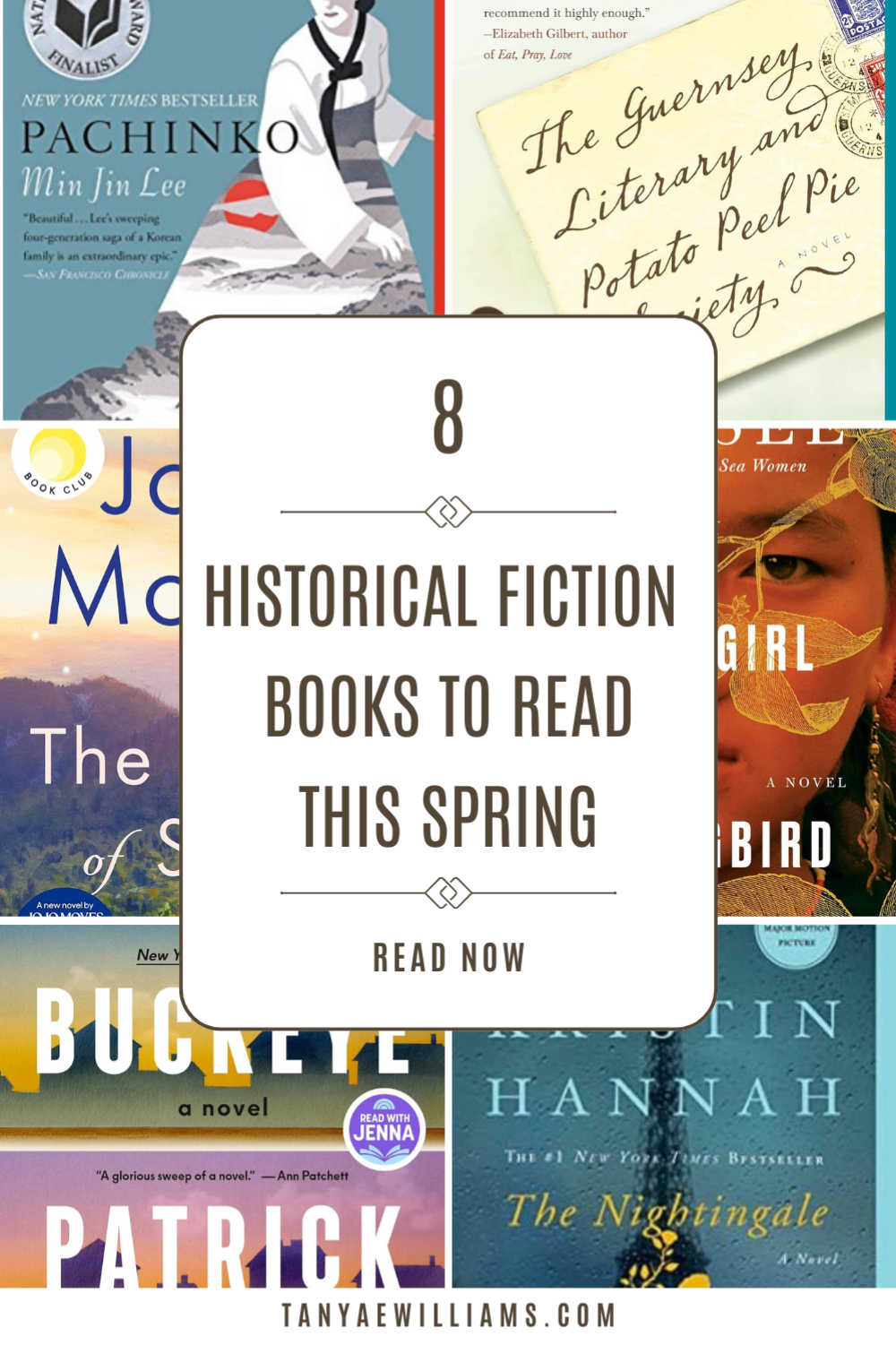
The Nightingale by Kristin Hannah
Often remembered for wartime intensity, but its lasting power comes from what follows—grief, survival, and the long emotional cost of endurance.
The Guernsey Literary and Potato Peel Pie Society
by Mary Ann Shaffer and Annie Barrows
Quietly spring-aligned through letters, community healing, and lives learning how to resume after occupation.
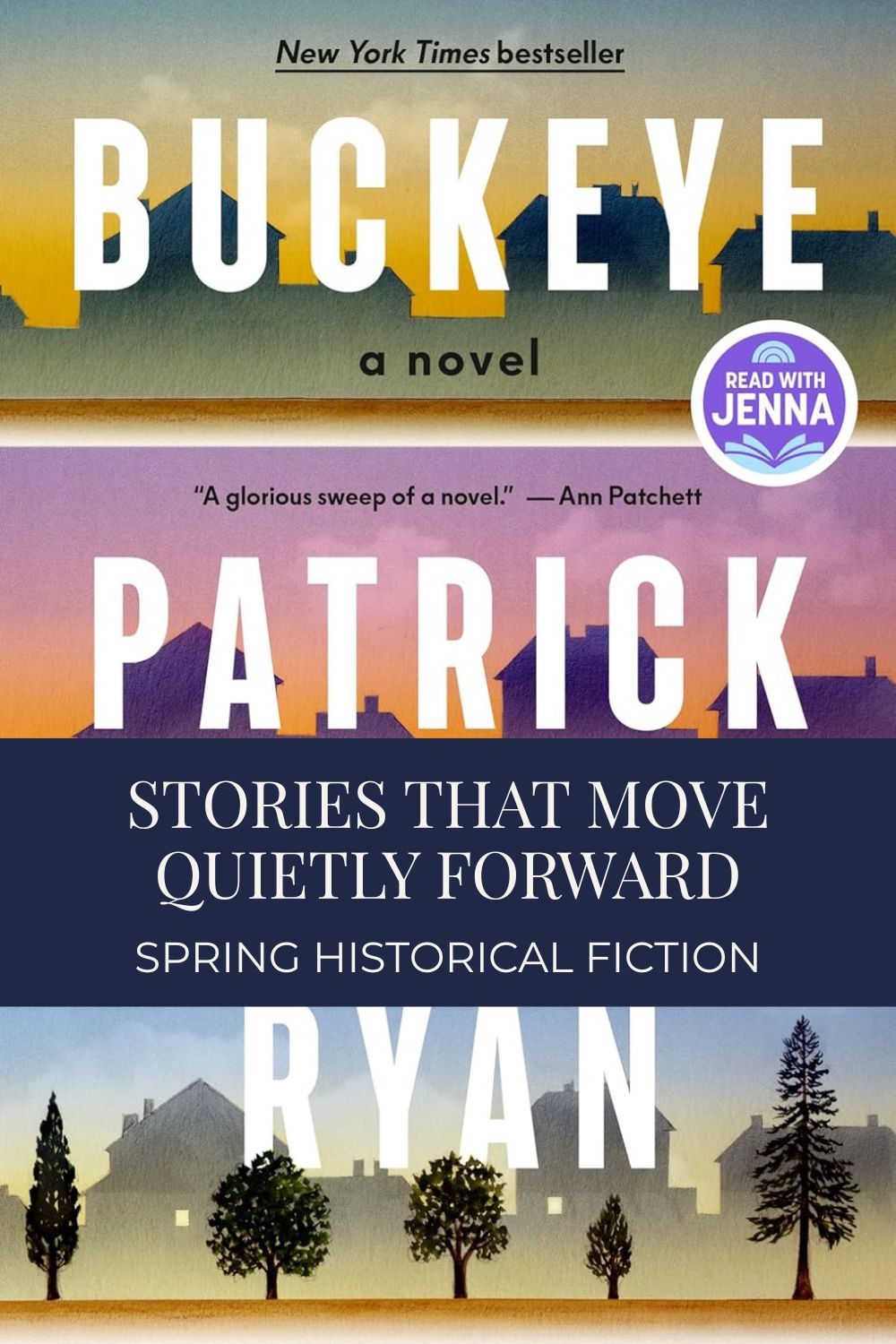
Buckeye by Patrick Ryan
Set in the immediate aftermath of World War II and unfolding across generations, Buckeye explores how private choices and buried truths shape lives long after history declares a victory. Its quiet tension and generational reckoning make it especially resonant for spring reading.
Women Redefining Worth in the Margins of History
Many of the most resonant spring reads center on women whose lives were shaped by limitations they didn’t choose.
- Dreams deferred by tradition, gender, or family expectation
- Strength expressed through persistence rather than rebellion
- Identity forged quietly, over years rather than moments
These novels honor women who continued—even when recognition never came.
The Tea Girl of Hummingbird Lane by Lisa See
A long arc of womanhood shaped by tradition, separation, and survival—change arrives slowly and at great cost.
The Pull of the Stars by Emma Donoghue
Set during crisis, but deeply concerned with women’s invisible labor and the fragile emergence of hope.
One novel brings these spring-aligned themes together especially well—offering a sustained look at quiet endurance, deferred dreams, and the long work of becoming.
A Novel That Embodies Spring’s Quiet Kind of Change
If you’re drawn to historical fiction that explores resilience without spectacle, Growing into Greatness by Tanya E Williams fits squarely within this season of reading.
Set against the evolving landscape of Napa Valley from Prohibition through the Great Depression and beyond, the novel follows Sofia Russo—a woman whose dreams are quietly dismissed, not destroyed all at once. Rather than centering on a single turning point, the story traces decades of emotional endurance: ambition restrained, resentment buried, and identity reshaped by family legacy and silence.
What makes this a spring-aligned read is its patience. Change doesn’t arrive dramatically—it accumulates. Sofia’s journey is about reclaiming worth after long denial, deciding what legacy truly means, and choosing how to move forward without erasing the past. For readers who value character-driven stories, complex family dynamics, and women’s resilience expressed through continuation rather than defiance, this novel meets the moment spring creates.
If you’d like to explore the story further, you can find Growing into Greatness here.
Choosing Spring Reads That Stay With You
The most satisfying spring historical fiction doesn’t rush toward optimism. It allows room for uncertainty, reflection, and growth that feels earned rather than declared. Whether these stories unfold across generations or within a single life, they share a common truth: change is often quiet, and it matters most when it lasts.
The books that resonate during this season are the ones that trust readers to sit with complexity—and to recognize themselves in characters who are learning, slowly, how to go on.
Pachinko by Min Jin Lee
Generational endurance, identity shaped by forces larger than choice, and resilience expressed through continuation.
The Giver of Stars by Jojo Moyes
Quiet courage, community repair, and women redefining purpose through service rather than spectacle.
Spring rarely demands reinvention. Instead, it invites attention.
For historical fiction readers, this season often brings a desire to read stories that move forward without pretending the past is finished—novels that honor endurance, acknowledge loss, and make room for becoming. If your spring reading choices lean toward reflection rather than spectacle, that instinct is worth trusting. These are the stories that stay with us because they unfold the way real change does: quietly, unevenly, and with meaning.
If you’re looking for a novel that captures that same sense of gradual shift and hard-earned clarity, Growing into Greatness may be the right fit for this season. It’s a story about ambition deferred, family legacy, and the quiet strength it takes to define one’s worth on new terms—without erasing what came before.
Wherever your spring reading leads, may it offer not escape, but recognition—and stories that meet you in this moment of thoughtful forward motion.
Frequently Asked Questions About Spring Historical Fiction
What are the best historical fiction books to read in spring?
The best historical fiction books to read in spring are often stories focused on aftermath rather than crisis—novels about rebuilding, reflection, and gradual change. These books tend to explore what happens after survival, when characters begin to reassess their lives and choices.
Why does spring reading feel different for historical fiction readers?
Spring reading often feels different because readers shift from endurance to forward motion. Instead of seeking escape or intensity, many historical fiction readers gravitate toward stories that allow space for emotional processing, quiet hope, and meaningful continuation.
Is spring a good time to read emotional historical fiction?
Yes. Spring is an especially good time for emotional historical fiction that balances depth with movement. These stories acknowledge loss or hardship without remaining rooted in it, offering reflection alongside the possibility of change.
What historical fiction themes suit a reflective mood?
Themes that suit a reflective mood include quiet resilience, moral recalibration, rebuilding after loss, women’s invisible labor, and generational legacy. These themes allow readers to engage thoughtfully without the pressure of dramatic resolution.
Are there historical novels about rebuilding after loss?
Many historical novels focus on rebuilding after loss, particularly in post-war or post-crisis settings. These stories explore how individuals and families move forward while carrying memory, grief, and responsibility—often through small, everyday choices rather than sweeping change.
What kind of historical fiction feels right for spring?
Historical fiction that feels right for spring tends to be character-driven, emotionally grounded, and patient in its storytelling. These novels don’t rush optimism; they allow growth to unfold slowly, honoring both what was lost and what might still be possible.
Is Growing into Greatness a good spring historical fiction read?
Yes. Growing into Greatness is well suited to spring reading because it centers on long-term emotional endurance, family legacy, and the quiet work of reclaiming one’s sense of worth. Its focus on gradual change and reflection aligns naturally with spring’s quieter transition.