The Parisian Chapter: A Paris Library Historical Fiction
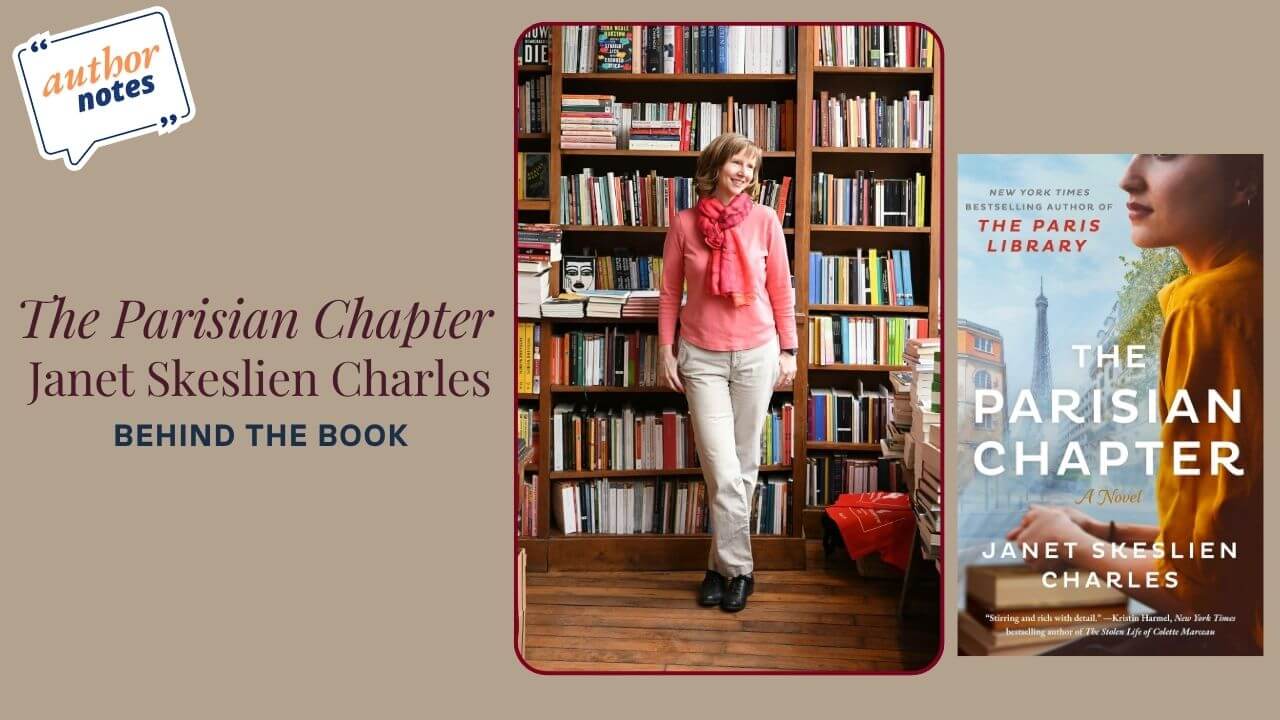
There's a particular kind of loneliness that comes with being twenty-something in a beautiful city — surrounded by people, and still feeling like you haven't quite arrived. Not really. Not yet. It's the season when every door feels open and terrifying in the same breath.
That's the emotional terrain New York Times bestselling author Janet Skeslien Charles returns to in The Parisian Chapter, her follow-up to The Paris Library. This time, we meet Lily Jacobson — a small-town Montana girl chasing an artist's life in Paris — who lands a job at the American Library in Paris and finds her footing among a community of misfits, dreamers, and quiet historians.
And what began, for Janet, as a story about a twenty-something finding her way became something more — a thread reaching back to the woman who first showed Lily what home could look like, wherever she planted it.
About The Parisian Chapter
It's 1995, and Lily has spent five years sharing a tiny Paris walk-up with her best friend, Mary Louise, the two of them determined to make it as artists. When Mary Louise moves out, Lily needs a new way to support herself — and lands a job as programs manager at the American Library in Paris, following in the footsteps of Odile, the beloved French neighbor who once told her stories of the library's heroic WWII-era librarians back home in Montana.
At the library, Lily meets an unforgettable cast: a favorite author, struggling students, haughty trustees, devoted volunteers, each carrying their own stories — and agendas. Told through multiple points of view, the novel eventually leads Lily to a box of archives in the library's attic that may hold a link to Odile's own Parisian chapter, decades earlier
The Story Behind the Story
Janet started writing this novel back in 2010, while she herself worked as the programs manager at the American Library in Paris — the same role she'd eventually give Lily.
"How might readers resonate with the protagonist?" I asked her. Janet's answer went straight to the heart of it: she remembers her own twenties as an exciting, terrifying stretch — every door open, every choice unmade. She's since talked with women in their eighties still asking themselves the same questions Lily asks in the book. The questions, it turns out, don't really end.
The library itself gave her plenty of real material to draw from — quirky coworkers, homesick patrons, even one genuinely frightening evening alone in the building with a patron who wouldn't leave. Those small true moments became the seeds for a much larger, fictional Paris.
The Emotional Core
Lily's journey is really a journey out of her own head. She starts the book convinced her way is the only way — stubborn enough that her best friend nicknames her private world "Lily Land." But her job puts her in daily contact with people from wildly different backgrounds, and slowly, her view widens. She learns that her way isn't the only way — just one of many.
Janet built in some genuinely uncomfortable choices for Lily along the way: a flash of real anger, a moment where she takes something that isn't hers. Janet hopes readers will argue about those choices rather than simply approve of them — she'd rather spark a lively book club debate than universal agreement. It's a very human kind of imperfection, and it's exactly the kind of quiet, flawed resilience that tends to stay with a reader.
Janet read a favorite passage aloud when we spoke, one that lands near the end of the book — a short, tender reminder to hold on, even when the years and the tears blur together. It's the kind of line you copy into the back of a journal.
Janet read this scene aloud when we spoke — and if you prefer to watch or listen to our full conversation, you can view the Behind the Book interview below.
Behind the Voices: Research & Immersion
One of the more surprising craft choices in The Parisian Chapter is its structure — nearly a dozen narrators, each given their own short chapters. Janet admits she doesn't usually enjoy multiple points of view as a reader herself, preferring to sink into one character's eyes. But because Lily is so young and inexperienced, a single narrow lens felt too limiting for a story about an entire library community.
Her favorite character to write, by her own admission, was the librarian who "hates people" — the opposite of Janet's own temperament, and all the more fun for it. Writing outward from herself, into trustees carrying invisible burdens and volunteers with their own quiet histories, let her build a fuller, more textured version of the real institution she once called her workplace.
Paris Historical Fiction Books Worth Reading
If Lily and Odile's world has you craving more Paris historical fiction books, The Paris Library is the natural place to start or revisit — it tells Odile's own story during the WWII occupation of the real American Library in Paris. Readers drawn to that same blend of real institutions and quietly resilient women may also enjoy Kristin Harmel's Paris-set novels, which share a similar devotion to research and place.
Frequently Asked Questions
What is The Parisian Chapter about?
Set in 1995, The Parisian Chapter follows Lily Jacobson, an aspiring artist who takes a job as programs manager at the American Library in Paris. Through a colorful cast of coworkers, trustees, and patrons — and an attic full of archives — Lily's story reconnects with Odile's from The Paris Library, decades later.
Is The Paris Library based on a true story?
Yes. The Paris Library is grounded in the real history of the American Library in Paris and the librarians who kept it running, and kept books moving to Jewish subscribers, during the Nazi occupation. The characters and plot are fictionalized, but the institution and its wartime courage are real.
Is there a sequel to The Paris Library?
The Parisian Chapter isn't a direct sequel so much as a return — it revisits Odile decades later and introduces Lily as a new central voice, set at the same real library. It can be read on its own, but readers who've spent time with The Paris Library first will recognize familiar faces.
Maybe that's the real thread running through both of Janet's library novels: the doors that feel impossibly open at twenty don't ever fully close. They just lead to quieter, later chapters — the kind Odile is living by the time Lily meets her.
If Lily's story resonates with you — that pull between the life you dreamed of and the one you're actually building — you might find your own next chapter waiting inside these pages, too.