How to Find the Best Historical Fiction Audiobooks
My husband and I have been having the same argument for years now, and I don't think it's ever going to end. He doesn't think audiobooks count as reading. I've never agreed with him, and at this point I've mostly stopped trying to change his mind.
I'm not going to settle it here, but I can tell you about the moment that stayed with me. I was standing in my kitchen with my hands elbow-deep in bread dough, flour dusted halfway up my arms, and a woman was running through Occupied Paris in my ears. By the time the chapter ended, I was just standing there — dough forgotten, hands still, somewhere else entirely. Whatever you want to call that, it wasn't nothing. That was history, told a different way, and it found me somewhere I never expected it to.
I've been an audiobook listener since February 2019, and if you've thought about trying one but weren't sure where to start — or whether it even “counts” — this one's for you.
What Makes a Great Historical Fiction Audiobook
Not every audiobook is created equal — and in historical fiction, the narrator is doing more work than in almost any other genre. Because this is where the difference really begins.
A strong narrator has to carry an accent without it slipping into caricature. They have to hold a dozen different voices — nobles and servants, soldiers and mothers — and make sure you never lose track of who's speaking. And they have to know when to slow down. Historical fiction lives in its quiet moments as much as its big ones, and a narrator who rushes past a grief scene can undo an entire chapter of buildup.
You'll also come across full-cast productions, where an ensemble of narrators — sometimes with music and sound design woven in — brings the whole world to life at once. Those can be extraordinary for big, sweeping sagas with a wide cast of characters. But for something quieter and more internal, like a single woman's diary-style narrative, one steady voice is often the better fit. Neither approach is “better.” It depends on the story you're stepping into.
I'll say this too, since it comes up more than it used to: with how far AI narration has come, some authors are now choosing it for their audiobooks, and I understand why — producing an audiobook well is expensive. But for me, it will always be a human narrator. A real voice doesn't just tell me a story. It transports me, close enough that I feel like I could reach out and touch the moment. That's not something I'm willing to give up, and it's worth listening to a sample before you spend a credit.
Which really is the heart of the bigger question underneath all of this — whether listening gets you the same thing reading does at all.
Are Audiobooks as Good as Reading?
This is the question underneath a lot of searches, and I'm not going to settle it for you — my own house is proof it doesn't settle easily.
What I can say is that listening and reading ask different things of you. On the page, you set the pace: you can flip back, reread a line, linger over a sentence. In your ears, a narrator sets the pace, and the voice, the emphasis and the silences all come with it. You give up some control and, sometimes, gain a different kind of closeness.
Neither one is automatically the better fit. A dense, detail-heavy story might be one you'd rather hold in your hands. A character-driven story about a woman at a crossroads might find you at the sink or in the car, and stay with you long after. It often comes down to the book, and the moment you're in.
So instead of asking which one counts, you might ask which one suits this story, right now. Whichever side of the debate you land on, the practical question is the same: where do you actually find the audiobooks?
How to Listen for Free on Libby and Hoopla
Here's the part I don't think gets talked about enough, because “just try an audiobook” isn't very helpful if you don't know where to find one.
Audible is the name most people know — a full catalog, but it runs on a subscription or credit system that adds up over a year of listening. Spotify has quietly built out a real audiobook library too, which is worth a look if you're already paying for music.
But the two I want to make sure you know about are Libby and Hoopla — both completely free through your local library card.
Libby works like a digital library shelf. You borrow a title, you wait if it's popular, and then you listen. Hoopla usually has no wait list at all, though its catalog looks a little different from Libby's. Both are apps you'll need to download to your phone or tablet before you can borrow anything — your library card doesn't unlock them automatically inside something else you already have installed.
And it's worth knowing upfront: not every library carries both. Some offer Libby, some offer Hoopla, and some offer both. A quick call or message to your local library will tell you exactly which app to download and how to link your card — a two-minute conversation that saves you from downloading the wrong one first.
And if you're already a Kindle Unlimited subscriber, keep an eye out for titles with the “Read & Listen” feature. Some books let you move between the ebook and the audiobook without losing your place, which is a lovely way to fold a story into a busy day.
I talk through all of this in this week's Author Notes episode, and if you'd like to hear it in my own voice, you can watch the full episode below.
A Few Favorites
I'm not going to give you an exhaustive list today — that's a post of its own, and honestly, one I'd love to write. But here are three audiobooks I'd hand you if you asked me where to start, and they happen to map neatly onto everything above: one narrator, two narrators, and a full ensemble.
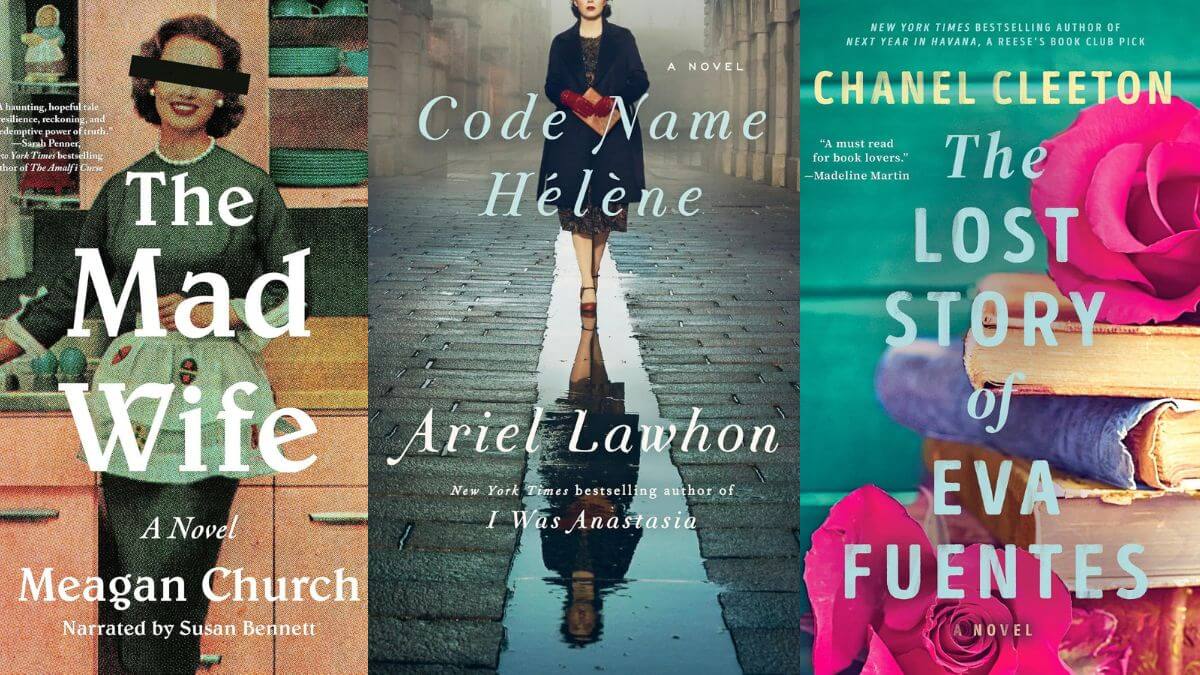
If you want to hear what a single, steady narrator can do, The Mad Wife by Meagan Church is a beautiful example — one voice carrying the full emotional weight of the story from start to finish.
Code Name Helene by Ariel Lawhon uses two narrators and is deeply, deeply emotive. There's one scene I still haven't been able to shake — I won't spoil it, but if you've listened to it, you already know the one.
And for the full ensemble experience, The Lost Story of Eva Fuentes by Chanel Cleeton has three narrators weaving through the story. All three of these books brought their stories to life in a way that felt less like listening and more like watching it unfold right in front of me.
And in case you're curious — yes, every one of my ten novels is available in audiobook too. If you'd like to hear how women's historical fiction sounds through my own writing, you can listen to a short sample on my store.
Here's what I'll leave you with: audiobooks aren't necessarily a shortcut, and they're not “less than.” Plenty of people listen because it saves them time — you can speed up a narrator and move through a book faster than you would on the page, and there's nothing wrong with that. Most audiobooks are narrated with that range of listening speeds already in mind, so don't be afraid to experiment. You may find one book calls for 1x and the next feels just right at 1.5.
However you listen, it's still another door into the same room. Sometimes the story that changes you finds you in your ears instead of in your hands — and that's not a lesser way to meet it.
Because sometimes, what makes a story stay with us is simply whether it feels true.
If that sounds like the kind of listening you're drawn to, come join me behind the scenes of history and storytelling — subscribe to the newsletter and I'll keep sending you more of both.
Frequently Asked Questions
What are the downsides of audiobooks?
Audiobooks aren't perfect for every reading moment. They're harder to skim back through if you lose your place or want to revisit a line, a strong or mismatched narrator can affect how much you enjoy a book, and it's easier to drift off and miss something if you're doing several things at once while listening. None of that makes them “less than” reading — it just means the right format depends on the story and the moment.
Do you pay for every audiobook you listen to on Audible?
Not necessarily. Audible runs on a subscription and credit system, so the cost can add up if you listen often, and plans change, so it's worth checking what's included before you join. If you'd rather skip subscriptions altogether, Libby and Hoopla let you borrow audiobooks free with your library card, depending on which your library offers.
What are some good historical fiction audiobooks to start with?
Start with the narrator rather than the title. Listen to a sample, and think about whether the story suits one steady voice or a full ensemble. The three audiobooks above are a good way to hear the difference: The Mad Wife has one narrator, Code Name Helene has two, and The Lost Story of Eva Fuentes has three. And if you'd like to try one before spending a credit, Libby and Hoopla are free through your library card.