The Great Depression in Canada Before It Had a Name
Before history becomes history, people have to live through it without knowing what it will mean.
That is the part I often find myself thinking about.
Not the neat chapter title we assign later. Not the decade summarized in a few familiar images. But the unsettled days before anyone fully understood that the world beneath them had begun to shift.
In Canada in 1929, the Great Depression did not arrive with a name attached. It arrived in headlines, rumours, falling prices, strained conversations, and the quiet calculations families began making around kitchen tables.
And that is where the story becomes especially powerful.
Because before the Great Depression became one of the defining events of the twentieth century, it was simply uncertainty.
Canada in 1929: The Moment Before Understanding
When we look back at October 1929, hindsight does a great deal of work for us.
We know the stock market crash was not a temporary disturbance. We know the economic collapse would reach deep into cities, farms, businesses, banks, factories, hotels, and households. We know the 1930s would test people in ways many could not yet imagine.
But the people living through those first days did not know that.
They had fragments.
A newspaper headline.
Rumours passed between neighbours.
The frantic telephone call from their broker.
The awareness that their employer was suddenly anxious.
Or perhaps, a family member who stopped speaking quite so confidently about the future.
That is one of the things I find most compelling about historical fiction set during major historical turning points. The people inside the moment rarely understand its full shape.
They are not living in “the Great Depression” yet.
They are living in a Tuesday. A week. A month. A season of worry that may pass—or may not.
History often feels most intimate before anyone knows what to call it.
Black Tuesday in Toronto
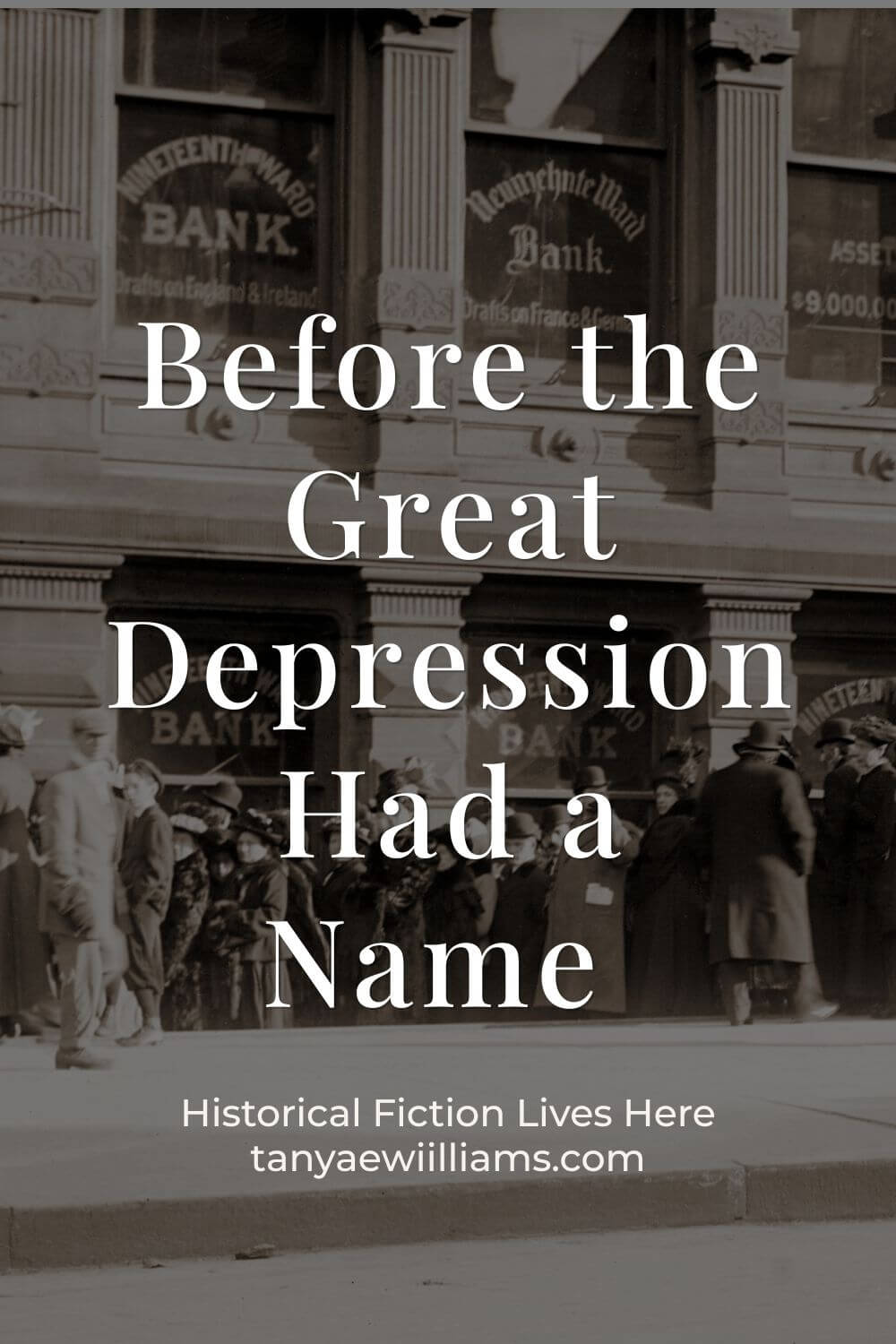
One of the most vivid Canadian examples of this uncertainty came on October 29, 1929: Black Tuesday.
In Toronto, panic did not remain neatly tucked inside newspaper’s financial columns. It moved into the streets and onto the trading floors.
At the Toronto Stock Exchange, the fear became physical. Investors and sellers pushed into the trading spaces as people scrambled to understand what had happened, what could still be saved, and whether ruin had already arrived.
It is easy, from a distance, to think of the crash as numbers.
Lines on a chart.
Stocks rising and falling.
Economic language that can feel distant from ordinary life.
But that kind of panic reminds us the crash was not abstract. It was emotional. It was public. It was immediate.
A person could wake up believing they had security and end the day realizing that security had vanished.
And often, what disappeared was more than money.
It was reputation.
It was confidence.
It was a marriage suddenly under strain.
It was a business no longer certain to survive.
It was a future that had seemed almost within reach.
That is where economic history begins to touch human history.
The Fragile Optimism of the 1920s
Part of what makes 1929 so interesting is the decade that came before it.
The 1920s had carried a sense of movement and possibility. Cities were growing. Consumer goods were changing daily life. Credit made certain comforts feel more accessible. Hotels, shops, offices, railways, banks, and businesses all belonged to a world that seemed to be moving forward.
But that progress was not equally secure.
Many families were already balancing carefully. A missed paycheque mattered. A failed business could be devastating long before the wider economy collapsed. A decline in railway travel could mean lost work. A hotel with fewer guests could mean fewer staff, reduced hours, or a careful review of every expense.
And then came the crash.
What began in financial markets did not stay there.
It travelled.
It moved from stock exchanges into offices and shops. From employers into households. From public headlines into private worry.
At first, the signs may have been quiet.
A purchase delayed.
A bill paid later than usual.
A daughter’s wages becoming more important.
A son unable to find work.
A father too proud to admit the business was struggling.
A mother stretching meals further than anyone realized.
Those small adjustments may not always make the history books, but they are the moments that reveal how history is truly lived.
This is also where historical fiction often finds its way in. Dates and statistics can tell us what happened, but fiction asks another question entirely: what did it feel like before people knew how the story would end?
For readers interested in that balance between fact, imagination, and emotional truth, this connects closely to how historical fiction helps us imagine the emotional truth behind real events.
Watch the Historical Deep Dive Episode
This was the moment everything shifted for me as I thought about Canada in 1929—not only the crash itself, but the uncertainty surrounding it.
If you’d like to step more deeply into the atmosphere of those early days, you can watch the full Author Notes Historical Deep Dive episode below.
Vancouver and the Uneasy Beginning
Toronto gives us one version of the crash: visible, financial, immediate.
Vancouver offers another lens.
As a port city and railway city, Vancouver was deeply connected to movement: trade, travel, migration, employment, and the search for opportunity. People passed through. Goods moved in and out. Workers depended on industries that could be affected by forces far beyond the city itself.
As the Depression deepened, unemployment and relief would become very visible parts of Vancouver’s story.
But at the beginning, there would have been the same question hovering beneath ordinary life:
Is this temporary?
Or is something larger happening?
That question matters to me because the final novel in the Hotel Hamilton series takes place just as the Great Depression begins.
And a hotel is a particularly interesting place to explore uncertainty.
A hotel is built on movement. Guests arrive and leave. News travels through lobbies, dining rooms, corridors, and staff entrances. People bring luggage, secrets, ambitions, disappointments, and sometimes the carefully polished version of themselves they want the world to see.
But during a moment of economic instability, appearances can become fragile.
A guest who seems wealthy one week might be desperate the next.
A family’s status might depend on keeping financial ruin hidden.
An employee might hear more than she should.
A young woman building a new life might discover the world she expected to enter is not as stable as it appeared.
The beginning of the Depression was not only about loss. It was also about revelation.
Financial pressure has a way of exposing what was already strained.
The Private Layer of Economic History
When we talk about the Great Depression, we often talk about unemployment, breadlines, relief, stock prices, and political response.
Those things matter enormously.
But there is another layer too.
The private layer.
That moment someone opens a letter and realizes the money is gone.
Or when a family must decide what can be sold.
And even when a woman understands the life planned for her may no longer be possible.
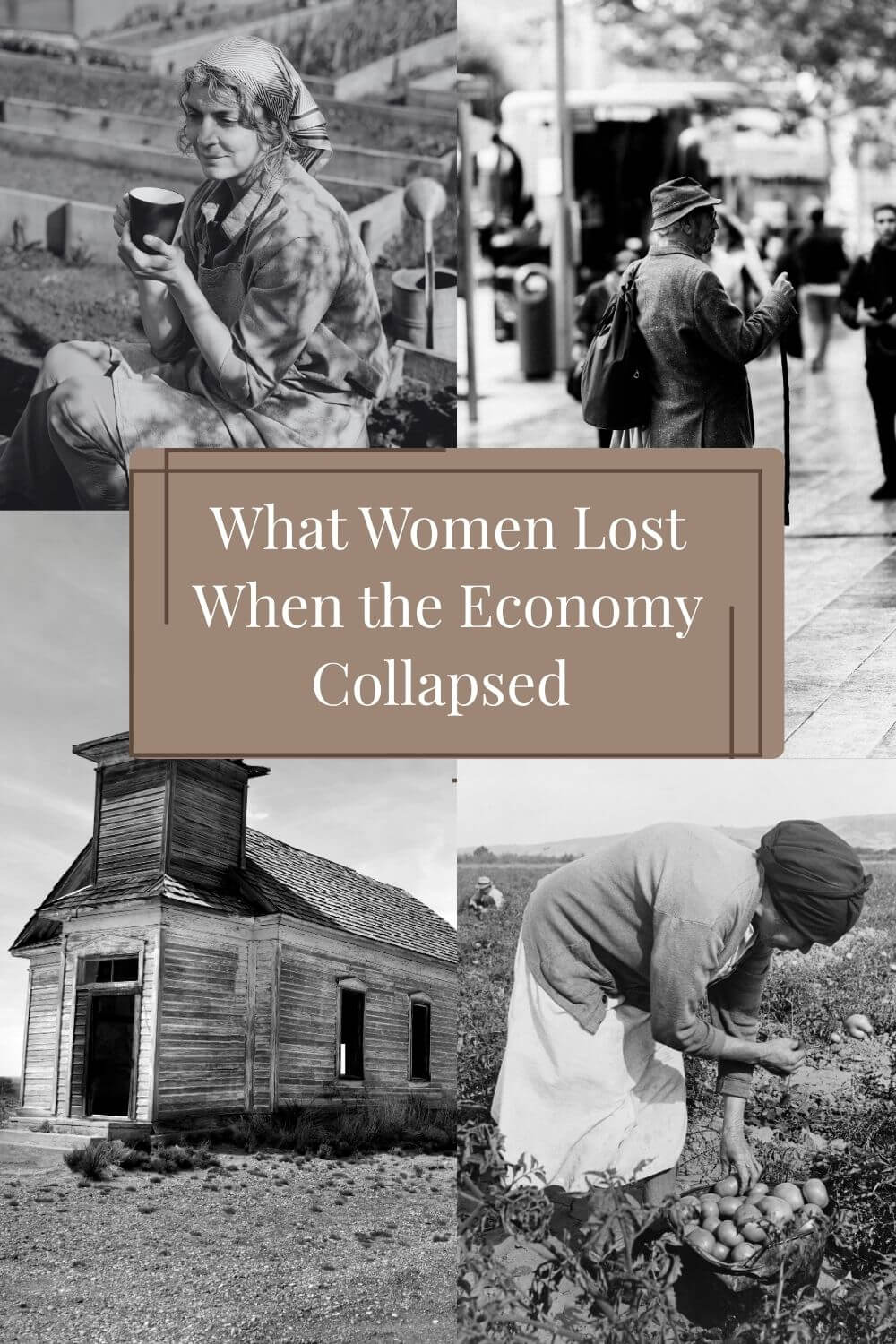
For women, these pressures could be especially complicated.
Women’s wages often mattered deeply to their families. A daughter working in an office, shop, hotel, or household might help keep everyone afloat. Yet paid work for women could also become controversial, especially when many men were unemployed.
Respectability did not disappear because money was scarce.
Women were often expected to adapt quietly. To help where needed. To sacrifice without making too much noise. To make do while still preserving the appearance that everything was under control.
That quiet pressure is the kind of emotional history that stays with me.
Because historical turning points do not only change governments, markets, and institutions.
They change what is possible inside a home.
They change who gets to choose.
They change which dreams can survive.
Why This Moment Matters in Historical Fiction
The early days of the Great Depression are compelling because they sit between two kinds of knowledge.
The certainty we have now.
And the uncertainty people had then.
As readers, we know what is coming. We bring that knowledge with us. But the characters living inside 1929 would not have had that same clarity.
They would have been trying to understand the headlines. Protect what they could. Preserve appearances. Make decisions with incomplete information.
That is powerful territory for historical fiction.
Because so much of life happens before we know what our choices will mean.
A woman may accept a job without knowing it will change the course of her family’s future. A family may hide a financial loss without realizing the secrecy will cost them more than the money did. A hotel employee may notice one small detail that reveals a much larger truth.
Some historical turning points begin quietly—long before anyone knows they are standing inside one.
That is what draws me back to Canada in 1929.
Not only the crash. Not only the economic collapse. But the uneasy beginning. The moment before history had hardened into memory.
The Depression before it had a name.
FAQ: The Great Depression in Canada
When did the Great Depression begin in Canada?
The Great Depression is generally associated with the stock market crash of October 1929, though its effects deepened over time. In Canada, the economic impact spread through financial markets, businesses, employment, agriculture, trade, and family life during the years that followed.
What happened in Toronto on Black Tuesday?
On October 29, 1929, panic reached Toronto’s financial district as investors and sellers reacted to the market crash. The fear was not only financial but physical and public, with crowds pressing into trading spaces as people tried to understand what had been lost.
How did the Great Depression affect ordinary families?
The Depression affected families through job losses, reduced wages, business failures, housing insecurity, and difficult household decisions. Many families had to reconsider spending, work, pride, social status, and survival in deeply personal ways.
Why is the beginning of the Great Depression useful for historical fiction?
The beginning is especially rich for storytelling because people did not yet know they were living through a defining historical event. That uncertainty creates emotional tension, especially for characters making choices without knowing what the future holds.
Before History Has a Name
When we look back at 1929, it is easy to see the beginning of the Great Depression.
But for the people living through it, the future was still hidden.
They were trying to get through the day. Trying to understand the headlines. Trying to protect what they could. Trying to decide whether the unease they felt was temporary—or whether the world had already begun to change.
That is where history becomes especially powerful to me.
Not in the certainty of hindsight, but in the uncertainty of the moment itself.
Because before history becomes something we study, it is something people survive.
And often, they do so without knowing what it will one day be called.
Step into the stories behind the stories
Subscribe to my newsletter for thoughtful reflections on historical fiction, women’s lives, research discoveries, and the quiet moments where stories begin.