What People Don't See in a Book Cover
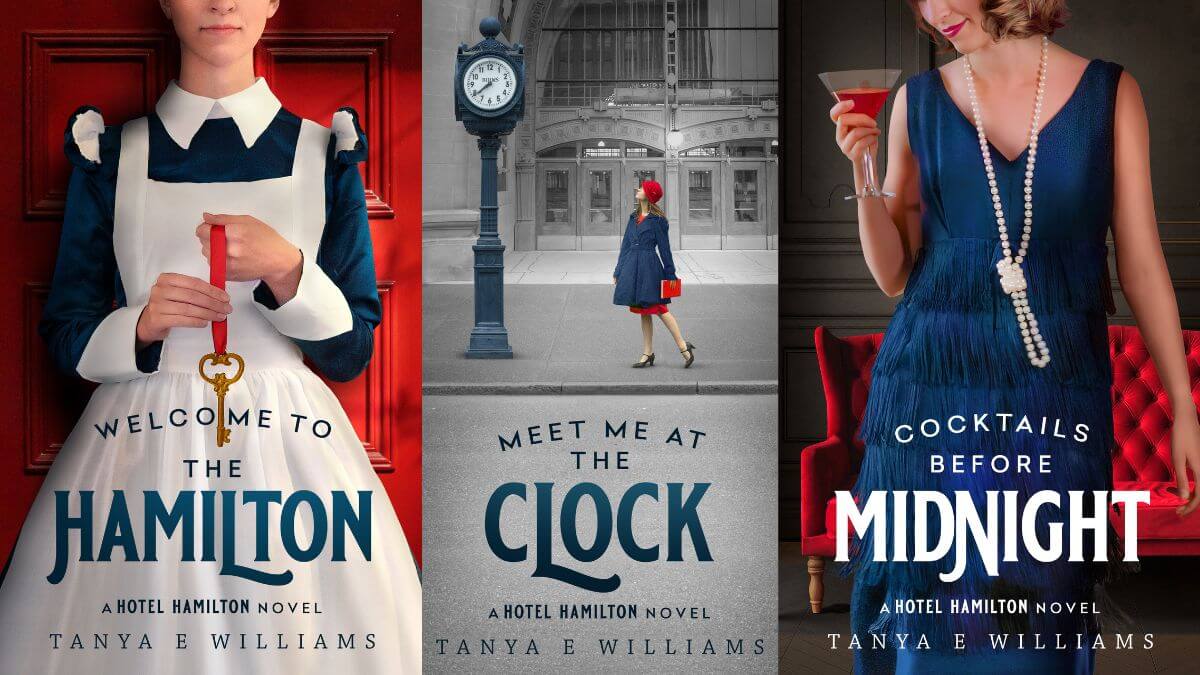
Long before the first Hotel Hamilton book was finished — before I even knew how many books there would be — I was standing on a Vancouver street corner planning a photo shoot.
Costumes. Locations. The exact slant of light we needed, at a particular hour, in a particular part of the city. Months of quiet planning for a single day of work, all in service of a story that existed, at that point, only in my head.
That photo became the foundation of a cover. And recently, that same cover — along with several others like it — was called AI generated in the comments of one of my posts.
It's a comment I deleted. But it's one I haven't quite been able to let go of.
Before There Was a Book, There Was a Photograph
Four of us worked on that shoot: a photographer, an assistant, a model who could carry the era in the way she stood and moved, and me, holding a vision I hadn't finished writing yet. We spent the day chasing 1920s Vancouver — the posture, the fabric, the light — trying to capture the feeling of the Hotel Hamilton before a single novel was ready for readers.
One day. Months of preparation. And that was only the beginning.
Because this is where a book cover artist actually enters the story — not with a template or a filter, but with raw material and years of trained instinct.
What a Book Cover Artist Actually Does
As each Hotel Hamilton book was written, my cover designer — a genuinely gifted artist with her own eye and her own years of craft — took those original shoot photos and reshaped them, book by book, into what readers see on the shelf today. Reworked. Retouched. Redesigned by hand, again and again, over the course of years.
Good cover design isn't decoration. At its core, it's a kind of translation — turning a feeling, a setting, a woman's story, into something a reader can recognize across a room. The strongest covers hold a few things in balance at once: a clear sense of genre, an emotional tone, and just enough restraint to let a reader's imagination do the rest. That balance is exactly what my designer has spent years learning to strike.
So when I say the Hotel Hamilton covers are about as far from AI generated as a book cover can get, I mean it literally. There is a human hand in every layer of them.

The Comment That Stuck With Me
"Clearly AI generated," the comment read. I blocked the account and deleted it, and at the time, that felt like the responsible thing to do. Nobody needs that kind of negativity taking up space.
But I haven't been able to shake the thought that maybe I should have corrected it instead.
I'm not the only author this is happening to, and once you understand why, it's not really surprising. Large language models were trained on an enormous amount of text — much of it novels, including, in more cases than anyone would like to admit, pirated copies of authors' own copyrighted work. Mine included. So when a reader says a manuscript "sounds like AI," what they're sometimes hearing is AI that was trained to sound like us.
At the same time, AI-generated books really are flooding the market, some barely glanced at by a human before publication. A kind of policing has sprung up in response — well-intentioned, mostly, but messy. And in that mess, a lot of very real, very human effort is getting mistaken for something it isn't.
This was the moment everything shifted for me — and if you'd like to see how that first shoot actually unfolded, you can watch the full behind-the-scenes story below.
What We Don't See
I think about this every year around the holidays, actually. It takes me days to prepare a full Christmas dinner — the planning, the shopping, the timing, everything landing on the table at the same moment. And then, twenty minutes later, it's over. Everyone's full. It was wonderful. Nobody at that table is thinking about the three days it took to get there. They're just enjoying the meal.
I suspect most women know this feeling somewhere in their own lives. A marriage that looks effortless from the outside but took years of quiet work to build. Children who turned out steady and kind, while someone tells you, "you make it look easy," and you know exactly how much it wasn't. The things we pour ourselves into rarely look like what they cost us.
That photo from the Hotel Hamilton shoot is no different. It looks like a pretty picture. It was actually eight months, four people, and one very long day — followed by years of a designer's careful hand.
Choosing With Your Eyes Open
An author friend of mine, Lisa M. Lane, said something recently that's stayed with me — that maybe the answer isn't policing what's AI and what isn't. Maybe it's simpler: call AI what it is, call human work what it is, and let readers choose, deliberately, what they want to support.
I like that. It doesn't ask anyone to be angry. It just asks us to know what we're looking at, so that when we do choose, we're choosing with our eyes open — which is really what this whole writing life comes down to, one honest choice at a time.
If you're curious how that same research-first approach shapes the stories themselves, my Historical Deep Dives collection is a natural next stop.
Frequently Asked Questions
What do you call a person who designs book covers?
A book cover artist, sometimes called a book cover designer, is the person who takes a manuscript's tone, genre, and story and translates it into the visual design readers see on the front of a book. Many, like the designer behind the Hotel Hamilton series, work closely with the author across the life of a book or series rather than on a single, one-off cover.
What are the four elements of a book cover?
Most book covers are built from four core elements: imagery (the photograph or illustration), typography (the title and author name), color (which signals genre and mood at a glance), and composition (how all of those pieces are arranged together). A strong cover uses all four in service of one clear feeling, rather than layering on more than a reader can absorb in a passing glance.
What are the two types of book covers?
Book covers are generally built from either photographic imagery or illustration. Photographic covers, like the Hotel Hamilton series, are built from styled photo shoots and then designed around those images. Illustrated covers are created from original artwork or digital illustration instead. Many historical fiction covers favor photography, since it can capture the texture and atmosphere of a specific era with real costuming, real light, and real locations.
Why do all modern book covers look the same?
Genre trends move in cycles, and cover design often follows current bestsellers closely, since publishers want a new title to visually signal "you'll like this if you liked that." It's part of why we made a deliberate choice to lean into specific 1920s Vancouver visual cues for the Hotel Hamilton series — the era's own textures and light — rather than chasing whatever look happens to be trending in historical fiction this year.
A Closing Thought
So the next time you pick up a book — mine or anyone else's — and something about the cover or the story moves you, I hope you'll remember there's very likely a lot more effort behind it than you can see. That's true of most things worth doing.
Because sometimes, what makes a story stay with us is simply whether it feels true.
If you'd like more moments like this one — the ones behind the scenes of history and storytelling — I'd love to have you join me in the newsletter.